
Nigeria Weekly Briefing: Security Politics, Welfare Pressures, and Education Signals at Home and Across the Diaspora (Jan 15–21, 2026)
Nigeria closed out the third week of January with a familiar mix of urgent security questions, widening welfare anxieties, and education sector developments that point to both opportunity and unfinished reform. From Kaduna’s latest mass abductions and the politics around official messaging, to renewed pressure on healthcare accountability and a handful of education interventions, from exam access to diaspora-linked scholarships. The week’s headlines underscored how tightly governance, citizen welfare, and learning outcomes remain intertwined.
Politics and governance: When security crises become messaging crises
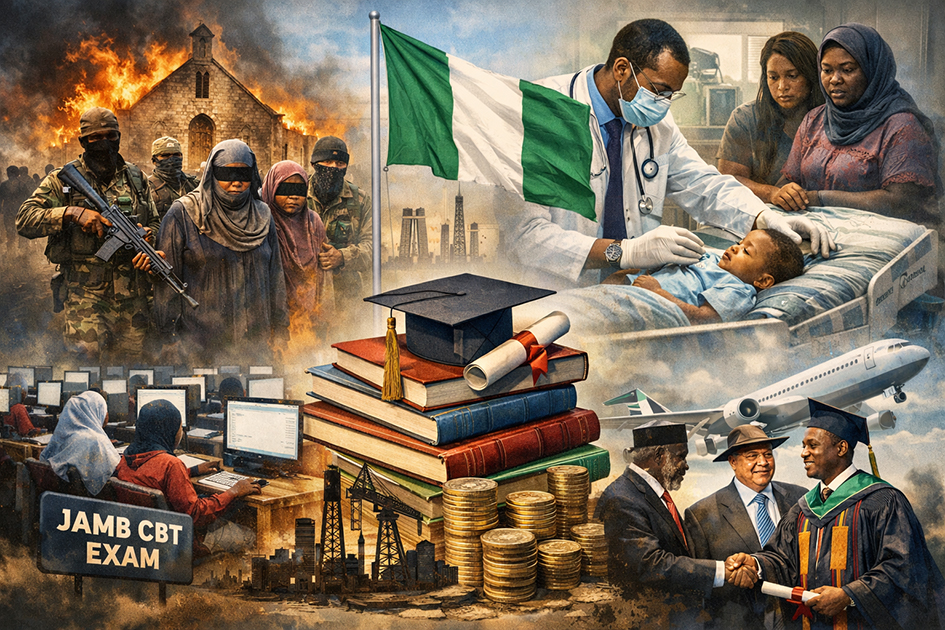
In Kaduna State, coordinated attacks on churches in the Kurmin Wali area during Sunday services triggered another round of national debate, not only about insecurity, but also about how authorities communicate during emergencies. Initial reports of the abductions were publicly downplayed before later confirmation, an approach residents and rights groups criticised as harmful in a fast-moving crisis.
The episode quickly moved from security reporting into political territory. Beyond the immediate questions, who attacked, how many were taken, and where the victims are, attention turned to whether official denial delayed response and amplified fear. International coverage noted that the attacks occurred amid heightened global scrutiny of northern Nigeria’s kidnapping economy and violence patterns, placing additional diplomatic and reputational weight on how state actors frame events.
Within Nigeria’s own political space, prominent figures also waded in. Peter Obi publicly criticised the denial of the Kaduna church kidnappings and urged urgent action, reflecting how security incidents increasingly become cross-party governance tests, measured not only by rescue outcomes but by transparency and responsiveness.
Citizen welfare: Safety, health, and the cost of weak systems
Security is welfare. In practical terms, mass abductions impose direct human costs, injury, trauma, lost livelihoods and indirect economic costs, as communities curtail movement, worship, markets, and schooling. Reports said large numbers remained missing after the Kaduna attacks, even after some returned or escaped, highlighting the scale of disruption for families and local economies.
Healthcare accountability also surged back into the welfare conversation, driven by a high-profile case that resonated widely. International reporting described how the death of novelist Chimamanda Ngozi Adichie’s 21-month-old son, followed by public outcry and legal action reignited debate about quality-of-care, staffing gaps, infrastructure deficits, and regulatory enforcement in Nigeria’s health sector.
Local reporting added that Lagos State authorities ordered a probe into allegations of negligence surrounding the death, signalling a governance response that many families in less-visible cases struggle to obtain.
Together, these stories framed welfare as more than social spending: it is also the everyday reliability of public systems, security, emergency response, hospitals, and accountability mechanisms—that determine whether citizens feel protected or exposed.
Education across sectors: Access, stability, and targeted interventions
The education story of the week did not belong to one level of schooling. It spread across basic education, tertiary stability, and the exam ecosystem that bridges secondary school to higher education.
· Basic education and inclusion: bilingual schooling as an out-of-school strategy
Multiple outlets reported the launch/commissioning of a new bilingual education boarding school in Kano State tied to a partnership involving UBEC and the Islamic Development Bank. The initiative was framed as part of efforts to tackle the out-of-school crisis and strengthen inclusive, skills-oriented learning, especially for children at risk of exclusion from formal schooling.
· University stability and labour relations: the FG–ASUU agreement
In the tertiary sector, reporting highlighted a renegotiated agreement between the Federal Government and ASUU, presented as a potential stabiliser for Nigeria’s public universities after years of recurring strike cycles and disrupted academic calendars. Analysts and stakeholders, however, continued to emphasise that outcomes will depend on implementation and credibility over time, not simply the signing of documents.
· Exam access and cost burdens: CBT centre removal concerns
In Taraba State, parents and guardians in Sardauna LGA protested the alleged delisting of their area’s only JAMB CBT centre ahead of the 2026 UTME, warning it could increase travel distances and costs for candidates. The pushback reflects a broader reality: education access is not only about fees, but also logistics, transport, safety, time, and the availability of accredited digital testing infrastructure.
Diaspora links: Scholarships and structured engagement with global Nigerian expertise
The “diaspora” angle this week was anchored less in politics and more in education pathways, how Nigerian talent circulates outward and connects back through training, research, and institutional partnerships.
PTDF 2026 Overseas Scholarship (MSc/PhD):
Applications opened for the 2026 PTDF Overseas Scholarship Scheme for MSc and PhD studies, widely reported as targeting priority fields for the oil and gas sector and placing scholars in selected partner universities abroad.
The official PTDF notice provides the programme framing and application details, while domestic coverage positioned it as part of the wider human-capital pipeline connecting Nigeria to global training ecosystems.
Diaspora BRIDGE initiative:
Beyond scholarships, the Diaspora BRIDGE initiative, described as a Federal Ministry of Education collaboration with TETFund continues to present itself as a structured mechanism for collaboration between Nigeria-based institutions and Nigerian academics/professionals abroad, with an emphasis on research, innovation, and capacity-building.
What the week reveals
Three threads stand out.
First, security governance is now inseparable from political credibility. The Kaduna church abductions were not only a human tragedy; they became a stress test for transparency and response, shaping public trust in institutions.
Second, welfare debates increasingly pivot on accountability, whether in emergency response or hospital care. The public reaction to a high-profile medical negligence allegation shows how quickly private grief can become a national audit of public systems.
Third, education remains Nigeria’s most visible long-term lever, but it is constrained by short-term fragilities: exam logistics, strike risk, and uneven infrastructure. Still, the week also carried signals of investment through basic-education inclusion pilots, attempts to stabilise universities, and diaspora-linked training and collaboration pathways.
For policymakers, civil society, and the diaspora community watching from abroad, the message is consistent: Nigeria’s progress in welfare and education will be paced not only by new programmes and agreements, but by the state’s ability to deliver reliability, security that protects daily life, healthcare that is safe and accountable, and education systems that keep doors open from primary school to postgraduate research.