
This week, diaspora life collided with global power again. But not in the abstract way that makes international news feel distant. The decisions and developments between 18 and 25 January 2026 are landing where diaspora realities are always measured: in the cost of sending money home, the safety of family members under political pressure, the stability of travel plans, the reliability of platforms that carry community voices, and the fragile line between rebuilding and erasing people’s rights.
From high-stakes diplomacy in Abu Dhabi to a new tax on remittances, from platform geopolitics to public health warnings tied to floods, this is a week of systems political, economic, technological tightening their grip on everyday diaspora survival.
A Deal in a Hotel Room Can Rewrite a Life in a Refugee Flat
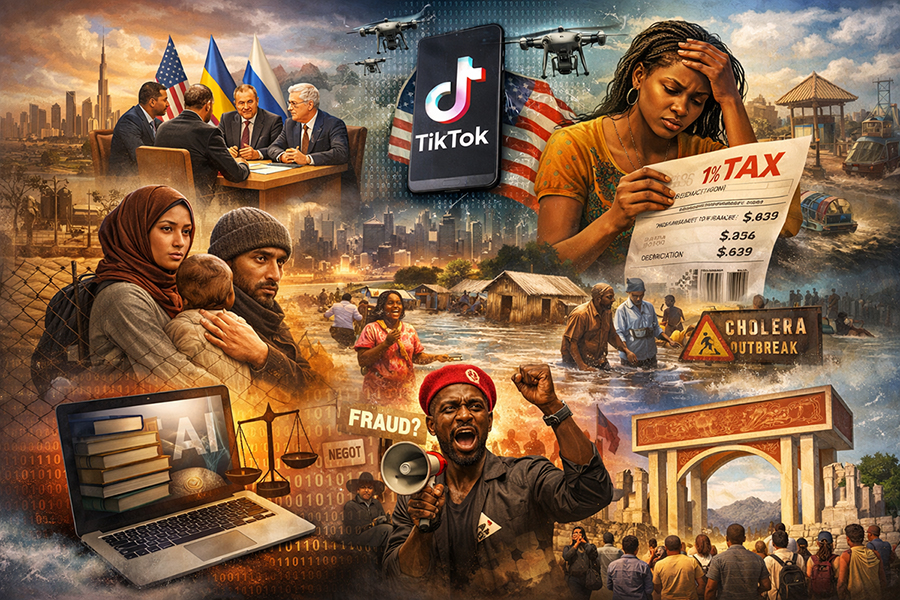
The week opened with news that U.S., Ukraine, and Russia talk began in Abu Dhabi on 23 January, continuing into the weekend. Publicly, the shape of a breakthrough remains unclear. Privately, where displaced families live, any movement triggers a different kind of urgency: Should we wait? Move? Apply now? Will borders open or harden? Will support get easier or disappear?
Our audience are not only watching “the war.” They are watching the future of papers, of eligibility rules, of whether relatives can cross safely, of whether return becomes possible or permanent exile becomes official.
TikTok’s U.S. Future: When Platforms Become Borders
If diplomacy shows how states redraw maps, this week showed how platforms redraw attention. TikTok finalized a U.S. venture structure to avoid a ban, and while that suggests the app remains open for now, the signal is unmistakable: social platforms are no longer neutral infrastructure, they are contested territory.
TikTok is not “just entertainment.” It’s the newsroom for young audiences, the distribution engine for community updates, the organizing space for activists, the cultural stage for identity and belonging.
The operational reality is harsh but clear: build as if TikTok stays, plan as if it doesn’t. The smart move this week isn’t a celebratory headline, it’s a resilience plan: mirror content to other platforms, push audiences to newsletters and messaging channels, and treat “platform stability” as a weekly variable, not a guarantee.
The Remittance Story: A 1% Tax That Hits Like a Household Emergency
Diaspora economies run on sacrifice. And nothing exposes that sacrifice like policy changes that land directly on kitchen-table budgets. This month, the U.S. remittance excise tax (1%) took effect on 1 January 2026, and it’s already creating confusion about who pays it, how it’s implemented, whether providers will pass the cost on to senders, and what exemptions apply.
For many families, remittances aren’t optional spending. They are school fees, rent, medication, emergency support after disaster, the thin line between stability and collapse.
So, when policy shifts change the cost or complexity of sending money home, it isn’t a finance story, it’s a survival story.
“Return” Is Trending, but Citizenship Is Never Just a Symbol
Another storyline cutting through the week is identity politics of a different kind: Benin’s citizenship offer to the African diaspora is drawing renewed attention. It’s a powerful narrative because it touches the deepest diaspora questions: Where do we belong? Who gets to come back? What does “home” mean after history?
But citizenship offers are never purely emotional. They are also policy, economics, and image-making. Done well, they can create pathways for cultural repair and investment. Done poorly, they can become branding campaigns that disappoint real people.
Floods, Cholera Risk, and the News Diaspora Families Fear Most
Public health stories often feel distant until they become a call from home. This week, health reporting highlighted rising cholera risk tied to flooding, with Malawi rolling out vaccines in response. For diaspora audiences, this is the kind of news that triggers immediate action: Is my family safe? Should they drink sachet water? Can I send money for treatment? Is travel safe?
Political Pressure Stories Don’t End at the Airport
Two governance stories this week underscore a hard truth: when politics tightens at home, diaspora communities feel it abroad.
In Uganda, reporting surfaced heightened safety concerns around opposition figure Bobi Wine, amid escalating rhetoric and arrests involving allies. In the Central African Republic, the election win of President Faustin-Archange Touadéra was confirmed amid fraud claims.
The Quiet Battle: AI, Copyright, and Who Gets Paid for the Story
Underneath the week’s loud headlines is a quieter fight that could reshape diaspora media economics: the battle over AI training data, licensing, and publisher compensation.
Meta’s reported AI deals with publishers and rising public pressure about whether AI companies are using creative work without permission signal a shifting landscape. For diaspora and community outlets, the question isn’t theoretical. It’s existential:
If your archives, your reporting, your photos, your cultural documentation, train systems that profit, what do you get back? Attribution? Money? Traffic? Or nothing?