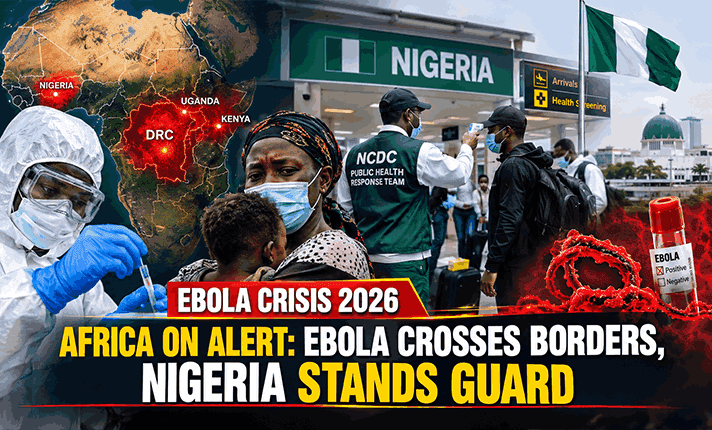

Africa is facing a major regional health emergency following the rapid spread of the Bundibugyo strain of Ebola virus disease, originating from the Democratic Republic of Congo in May 2026. The outbreak has expanded across several African regions, with confirmed cases reported in the DRC, Uganda, Kenya and Nigeria, while France has also recorded an imported case. According to the US Centers for Disease Control and Prevention, as of 26 October 2026, the outbreak had recorded more than 10,000 confirmed cases and approximately 4,900 deaths across the affected countries. The situation has raised international concern about further transmission and the capacity of health systems to contain it.
Nigeria's Immediate Response
Nigeria became a significant focus of regional attention following the confirmation of an imported Ebola case in the Federal Capital Territory, Abuja, on 20 October 2026. The Nigeria Centre for Disease Control and Prevention, working with the Federal Ministry of Health and Social Welfare and the World Health Organization, activated surveillance, isolation, contact tracing and infection prevention measures. The affected woman, who had travelled from Uganda, was placed under medical care before being evacuated to Switzerland on 26 October. Although Nigeria subsequently reported no confirmed patient remaining within its borders, WHO clarified on 26 October 2026 that the country had not been declared Ebola-free. Health authorities continued monitoring exposed contacts, with the mandatory 42-day observation period forming part of the requirements for declaring the outbreak over.
National Security and Public Safety Concerns
Beyond the immediate medical emergency, the outbreak presents serious national security and public safety concerns. Increased international travel, uncontrolled population movement, vulnerable border communities and inadequate healthcare infrastructure could complicate prevention. Insecurity and armed conflict in parts of eastern DRC have also restricted humanitarian access and complicated surveillance. Nigeria must therefore strengthen airport and land-border monitoring, laboratory capacity, emergency response systems and coordination between federal and state health authorities. Public awareness, accurate information, community cooperation and protection of frontline health workers remain essential to preventing panic, misinformation and further infections.
Economic and Political Implications
Economically, the outbreak threatens international trade, aviation, tourism, agriculture, investment confidence and the movement of goods and services. Restrictions or public fear surrounding affected countries could disrupt business, discourage foreign investment and increase pressure on already vulnerable economies. Politically, the crisis is testing the leadership, transparency and preparedness of African governments, particularly their ability to coordinate cross-border responses and mobilise emergency funding. Africa CDC and WHO have emphasised stronger regional cooperation, sustainable healthcare financing and international support. For Nigeria, maintaining public confidence through transparent communication, effective healthcare delivery and evidence-based policies will be crucial to protecting its economy and international reputation.
A Global Responsibility
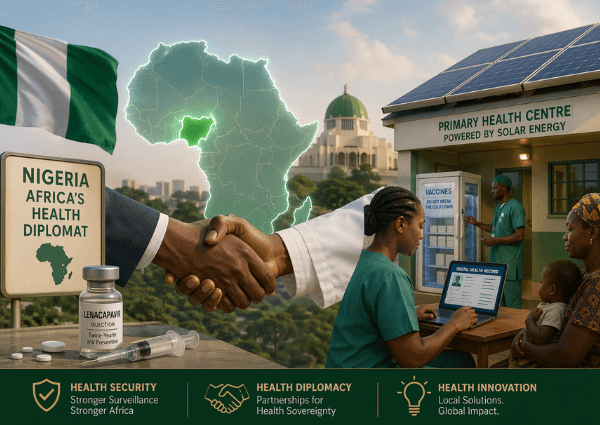
As the outbreak continues to evolve, responsibility extends beyond Africa to the international community. Governments across Europe, Asia, the Americas and other regions must strengthen disease surveillance, preparedness and emergency response without encouraging unnecessary discrimination or travel restrictions against affected populations. The experience of the 2014-2016 West African Ebola epidemic demonstrated the devastating human and economic consequences of delayed intervention. Nigeria, having previously contained Ebola in 2014, must build on those lessons. The priority in October 2026 is not to prematurely announce an Ebola-free status, but to sustain surveillance, protect lives, support affected countries and ensure that the current regional emergency does not develop into a wider global health crisis.