
Few figures in Nigerian history left as bold and transformative a mark as King Koko, the legendary ruler of the Nembe Kingdom whose courage, resistance, and political foresight helped shape the very foundations of modern Nigeria. Today, more than a century after his heroic stand, his legacy continues to grow and in 2026, that legacy will be celebrated like never before.
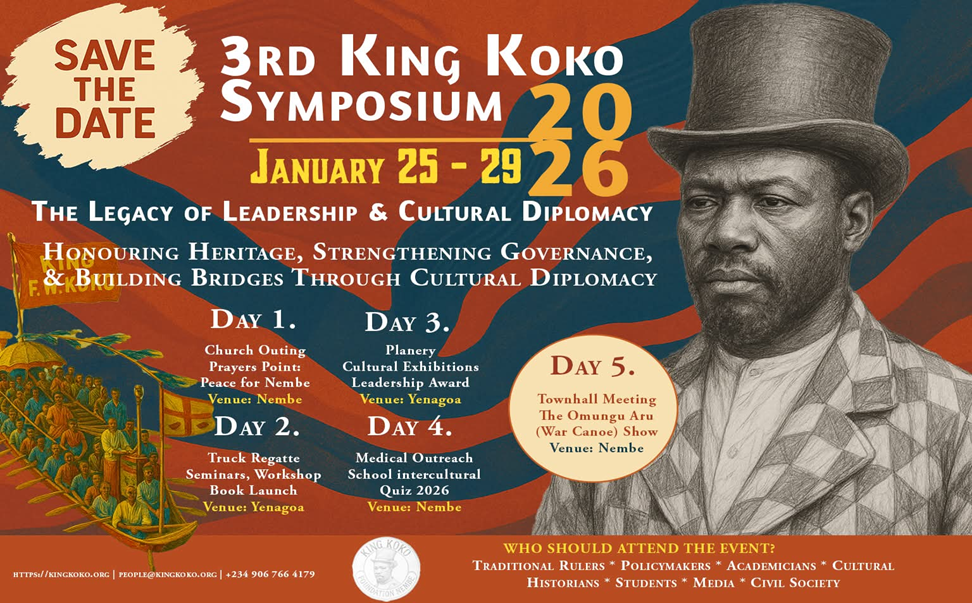
King Koko’s Day, a cultural and national heritage event, is officially returning next year from January 25 to 29, 2026 with an expanded, week-long programme set to unfold across Yenagoa and Nembe, Bayelsa State.
This celebration is more than remembrance. It is a statement of identity. It is a tribute to a man whose actions forced global conversations, exposed colonial injustice, and contributed to the political restructuring that later birthed the entity known as Nigeria. Many historians argue that Nigeria’s geopolitical awakening and by extension its formation was significantly influenced by the ripple effects King Koko’s resistance created.
King Koko is remembered not just as a ruler, but as a symbol of dignity. His famous resistance during the 1895 Akassa Raid was not an act of rebellion; it was an act of sovereignty. When colonial authorities tried to destroy the economic independence of the Nembe people by imposing monopolies, he stood firm. His leadership ignited debates in Europe, pressured the colonial administration, and reshaped British policies in the Niger territories. Simply put: King Koko changed the course of history.
And next year, Bayelsa State will honour him in a grand style befitting such a national figure.
A Week of Culture, Heritage, Memory, and Growth
The 2026 edition of King Koko’s Day has been carefully curated to reflect not only the history of the man but also the shared aspirations of his people today. The programme blends spirituality, culture, youth development, education, healthcare, and community engagement — all anchored on the values King Koko embodied.
Below is the official schedule:
Day 1 — January 25 (Nembe): Thanksgiving & Teaching on Peace
The celebration opens in Nembe with a solemn church thanksgiving, honouring King Koko’s leadership and resilience. This is followed by a teaching on peace, acknowledging his lifelong pursuit of justice and communal harmony.
Day 2 — January 26 (Yenagoa): Regatta, Workshops & Film
Activities shift to Yenagoa with a colourful truck regatta procession from Igbogene to the Cultural Centre a symbol of unity, strength, and cultural pride.
Attendees will enjoy a youth workshop and panel sessions, offering a space for conversation on leadership, identity, and nation-building.
The day ends at the Banquet Hall with a book launch and a special screening of the King Koko film, bringing history to life for younger generations.
Day 3 — January 27: Award Night
An elegant evening dedicated to recognizing individuals and institutions whose work reflects the courage, service, and excellence King Koko demonstrated.
Day 4 — January 28 (Nembe): Medical Outreach & School Quiz
Back in Nembe, a free medical outreach for 500 persons will be held, followed by an inter-school quiz competition designed to boost historical awareness among students.
Day 5 — January 29: Town Hall Meeting & The Omungu Aru (Warcanoe) Show
The final day features a town hall meeting, fostering conversations on peace, development, and cultural preservation.
Festivities close with vibrant boat regattas, a signature display of Nembe’s maritime heritage.
A Cultural Event With National Importance
King Koko’s Day is not a local festival, it is a national cultural event. It calls Nigerians across regions, ethnicities, and generations to learn, celebrate, and reconnect with a defining part of the country’s story.
By honouring King Koko, the event also honours Nigeria itself, how it came to be, what struggles shaped it, and the leaders whose courage paved the way for its unity.
As January 2026 approaches, anticipation is rising. The message is clear: King Koko’s legacy is alive. His story is our story.
And next year, that story will be celebrated powerfully again.