
Bayelsa State, created on 1 October 1996 from the old Rivers State, is one of Nigeria's richest cultural and historical regions. Situated in the heart of the Niger Delta, it is home to the Ijaw people (the fourth-largest ethnic group in Nigeria), whose history stretches back centuries along the Atlantic coastline and the Delta's vast waterways.
Long before colonial rule, Ijaw communities built thriving settlements, trading networks, and traditional political systems connected to the Atlantic Ocean, the Nun and Brass rivers, and countless creeks. Ancient centres such as Brass (Twon-Brass), Nembe and Ogbia became hubs for commerce, fishing, canoe building and cultural exchange with European merchants from the fifteenth century onward. Today, that legacy lives on through festivals, traditional institutions, crafts, cuisine and historical landmarks that continue to draw scholars and cultural enthusiasts.
Kingdoms and Coastlines That Shaped History
One of Bayelsa's most remarkable historical centres is the Kingdom of Nembe, in present-day Nembe Local Government Area, which flourished in the eighteenth and nineteenth centuries as one of the Niger Delta's leading trading kingdoms.
Another is Twon-Brass in Brass Local Government Area, established as a major commercial port that linked the Delta to European trade routes during the nineteenth-century palm oil era. Nearby Akassa, on the Atlantic coast, became historically significant in 1885 when the Royal Niger Company established one of its earliest trading posts there, making it a strategic gateway for commerce and colonial administration. The Akassa Slave Transit Camp and its surrounding coastal communities remain powerful reminders of the transatlantic slave trade and of the resilience of Niger Delta peoples. These sites offer visitors a chance to engage with a complex history of trade, resistance and cultural survival.
Further inland, Oloibiri in Ogbia Local Government Area marks the location of Nigeria's first commercial oil discovery in 1956: a site with strong potential for industrial heritage tourism through the proposed Oil and Gas Museum.
Festivals That Keep Heritage Alive
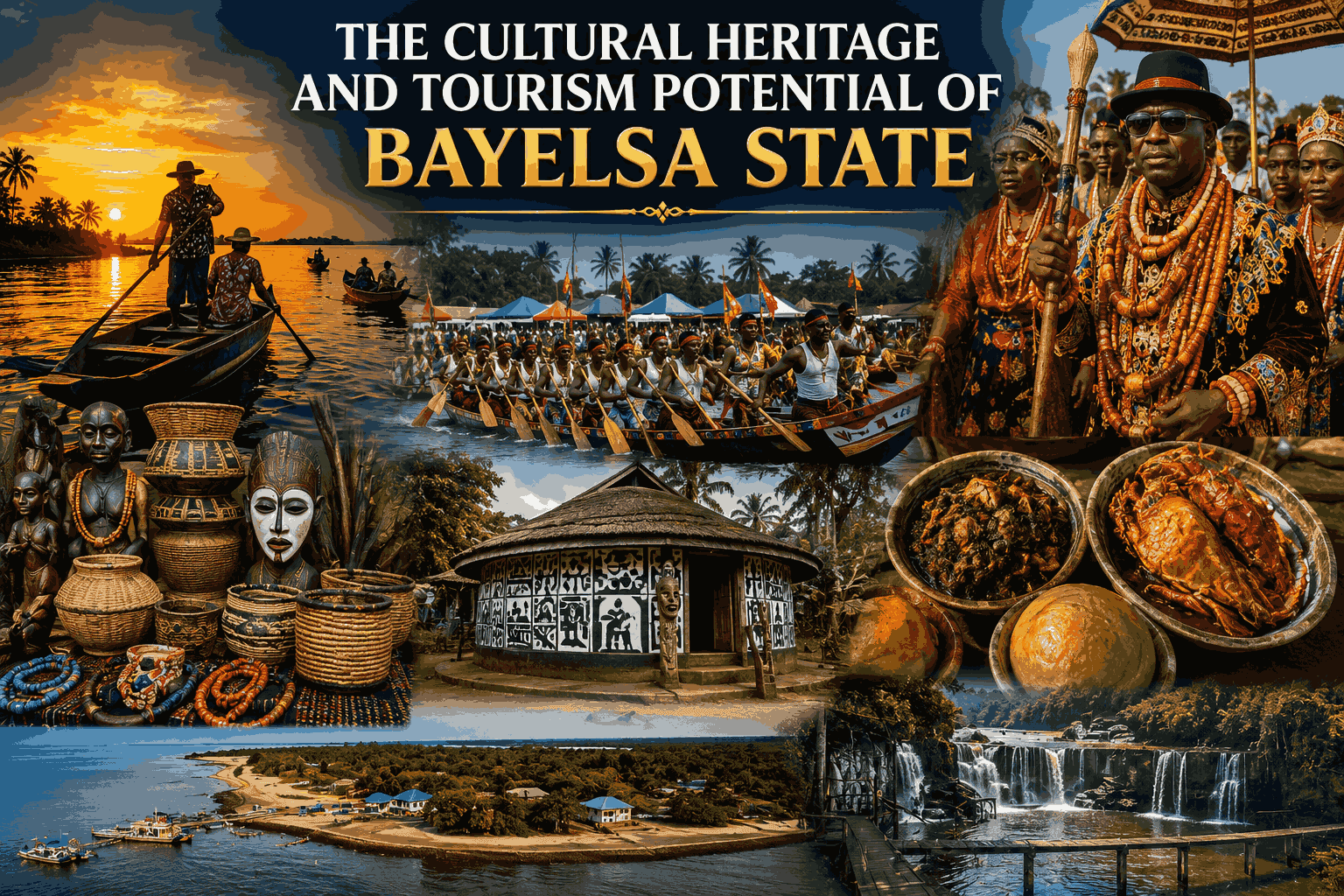
Bayelsa's festivals reflect centuries of tradition and community identity. Among the most celebrated is the Owuamapu Festival of Nembe Kingdom, a prestigious royal festival that honours ancestral heritage, kingship and unity through colourful regattas, traditional dances, masquerade displays, music and ceremonial processions.
The Seigbein Fishing Festival, celebrated in riverine communities, showcases traditional fishing skills, canoe races and communal gatherings that emphasise the close relationship between the Ijaw people and their waterways.
Throughout the state, visitors encounter vibrant displays of traditional attire, coral bead regalia, carved wooden canoes, handcrafted masks, woven baskets, raffia work, local musical instruments and energetic performances accompanied by drums and folk songs passed down through generations. These living traditions remain among Bayelsa's greatest cultural assets.
Cuisine and Craft Rooted in Water
Bayelsa's culinary heritage is equally distinctive and deeply rooted in its aquatic environment. Local cuisine centres on fresh seafood from the rivers and Atlantic coastline: fish, prawns, shrimps, oysters, periwinkles, crabs and crayfish. Popular dishes such as banga soup, owo soup, fisherman's soup, native fish pepper soup and starch are prepared with locally sourced ingredients including palm fruit extract, fresh spices, vegetables and smoked fish.
Traditional crafts also contribute significantly to the local economy: canoe carving, fishing net production, basket weaving, bead making, raffia weaving, pottery, wood carving and textile production. These crafts preserve centuries-old skills, support artisans and offer visitors authentic encounters with the heritage of the Niger Delta.
An Untapped Tourism Frontier
Bayelsa's tourism potential remains largely untapped. Its natural attractions include vast mangrove forests, freshwater swamps, pristine creeks, islands and the Atlantic coastline around Brass, Akassa, Okpoama and Sangana: landscapes suited to eco-tourism, boating, birdwatching, sport fishing and cultural excursions.
Future development could include improved road and water transport, heritage museums, cultural villages, waterfront resorts, international fishing festivals, marine conservation parks, cruise tourism and digital heritage centres that preserve oral histories and archaeological discoveries. With careful investment in sustainable infrastructure and the protection of historical landmarks, Bayelsa could become one of West Africa's leading cultural and eco-tourism destinations.
More Than Oil
Bayelsa stands as a remarkable meeting point of history, culture and natural beauty. From the ancient kingdoms of Nembe and Brass to the historic trading settlements of Akassa and the globally significant discovery at Oloibiri, the state tells an extraordinary story of resilience, commerce, tradition and innovation.
Its colourful festivals, rich cuisine, skilled craftsmanship, royal institutions and breathtaking waterways reflect a heritage that deserves national and international recognition. Preserving these assets while investing in sustainable tourism can create jobs, strengthen local economies, deepen cultural pride and introduce the world to the enduring legacy of the Ijaw people.
Bayelsa's greatest treasure is not only the natural resources beneath the ground, but the priceless history, traditions and identity that continue to thrive above it.