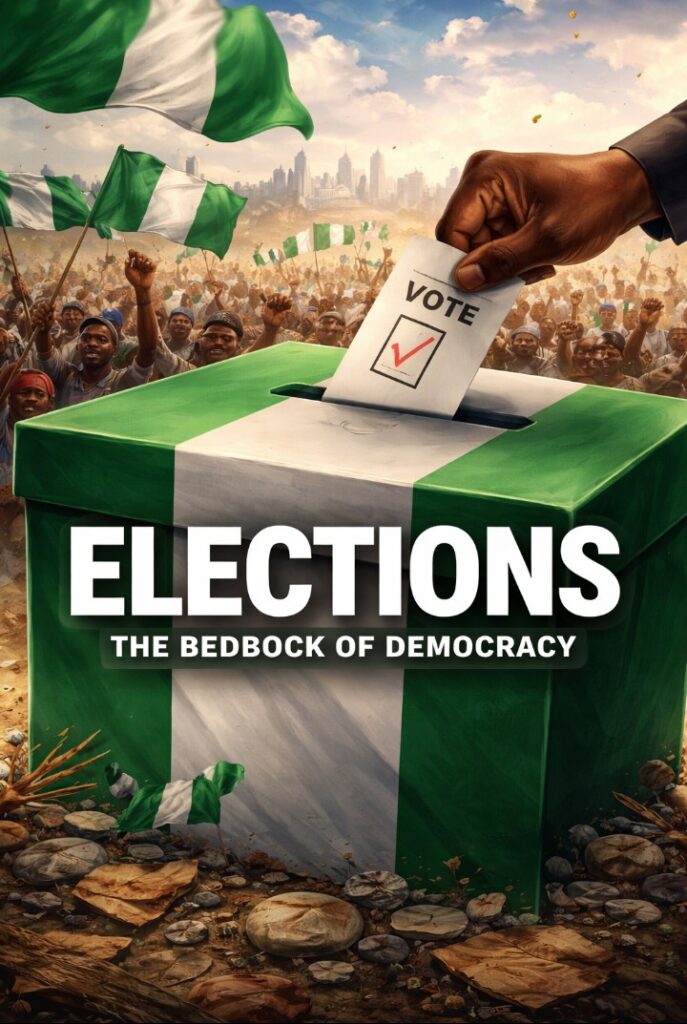

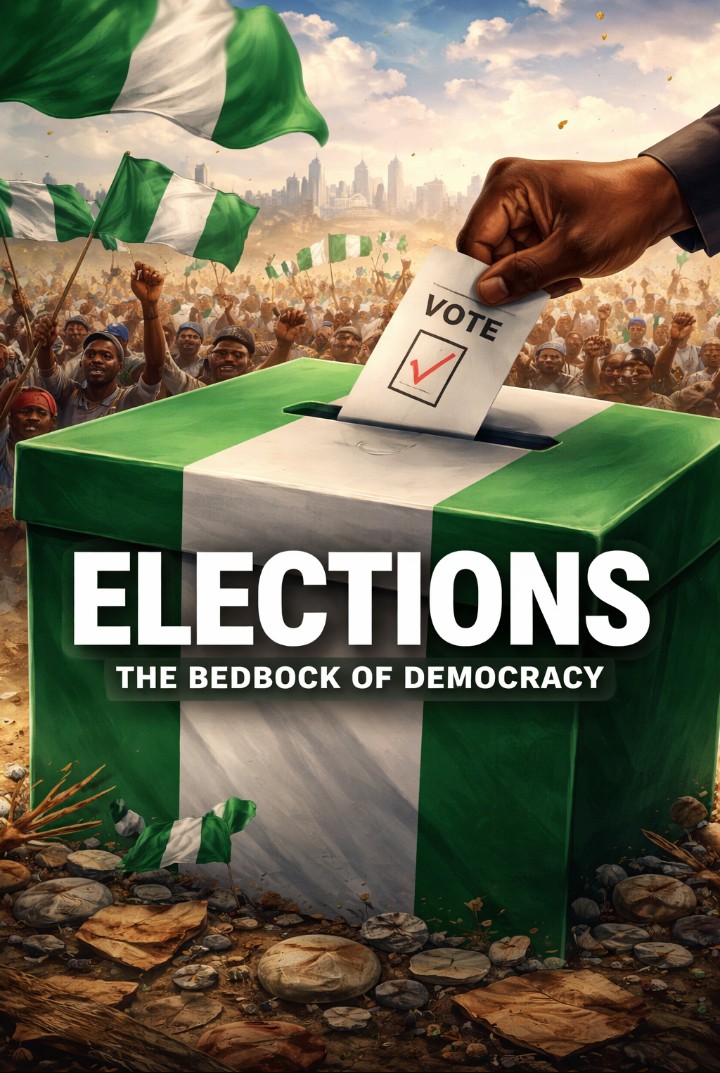
If elections cannot be trusted, it is no longer democracy.
At its core, democracy was designed to ensure that power truly belongs to the people. Not a select few. Not an elite class. But everyone. The idea is simple: governance should be for the people and by the people. And to make that possible, elections became the tool.
Elections are meant to give every citizen a voice. One person, one vote. It doesn’t matter your background, your status, or your influence – your vote is supposed to count just as much as the next person’s. That is the foundation.
But democracy is not just about voting. It is a two-way street. The people don’t only get to vote; they also get the chance to be voted for. In other words, leadership is not reserved for a few. It is open to anyone who earns the trust of the people. That balance – participation and representation – is what makes democracy work.
Nigeria’s journey with elections, however, did not start that way. The first election in 1923 was far from representative. It happened under British rule, following the Clifford Constitution introduced by Hugh Clifford. It wasn’t across Nigeria. Only two places voted – Lagos and Calabar. The rest of Nigeria had no voting rights at all.
To vote, you had to be male, be at least 21 years old, and earn £100 per year which was very high at the time.
Over time, things began to change. Subsequent reforms expanded participation. More regions were included. More Nigerians got the right to vote. Political awareness grew, and elections slowly became more reflective of the people’s will – at least in theory.
By the time Nigeria gained independence, elections had evolved into a national exercise. Since 1960, the country has conducted a total of 11 major elections, including the widely acknowledged but annulled 1993 election. On paper, that progression suggests growth. It suggests a system that has matured over time.
But the reality tells a more complicated story.
Despite the number of elections held, many Nigerians still feel disconnected from the process. The ideal of a government that truly represents the people often feels out of reach. Instead of a government of the people, what we sometimes see is a government of some people.
This gap between expectation and reality has had consequences.
Over the years, many citizens have grown weary of elections and political participation. There is a sense of fatigue. A feeling that the outcome is already decided long before the first vote is cast. Phrases like “who go win go win” capture that frustration – a quiet resignation that participation may not change much.
And when people begin to feel that their votes do not matter, the very foundation of democracy starts to weaken.
Because democracy does not just rely on elections existing. It relies on elections being credible. It relies on trust.
Now, once again, Nigeria finds itself on the brink of another election cycle. Campaigns will begin, promises will be made, and citizens will be called upon to participate in shaping the future of the country.
The question, however, remains the same.
Will this election reflect the true spirit of democracy – where every vote counts and the people genuinely decide? Or will it follow the familiar path that has left many feeling sidelined?
As Nigerians prepare to cast their votes, that question lingers – unanswered, but impossible to ignore.