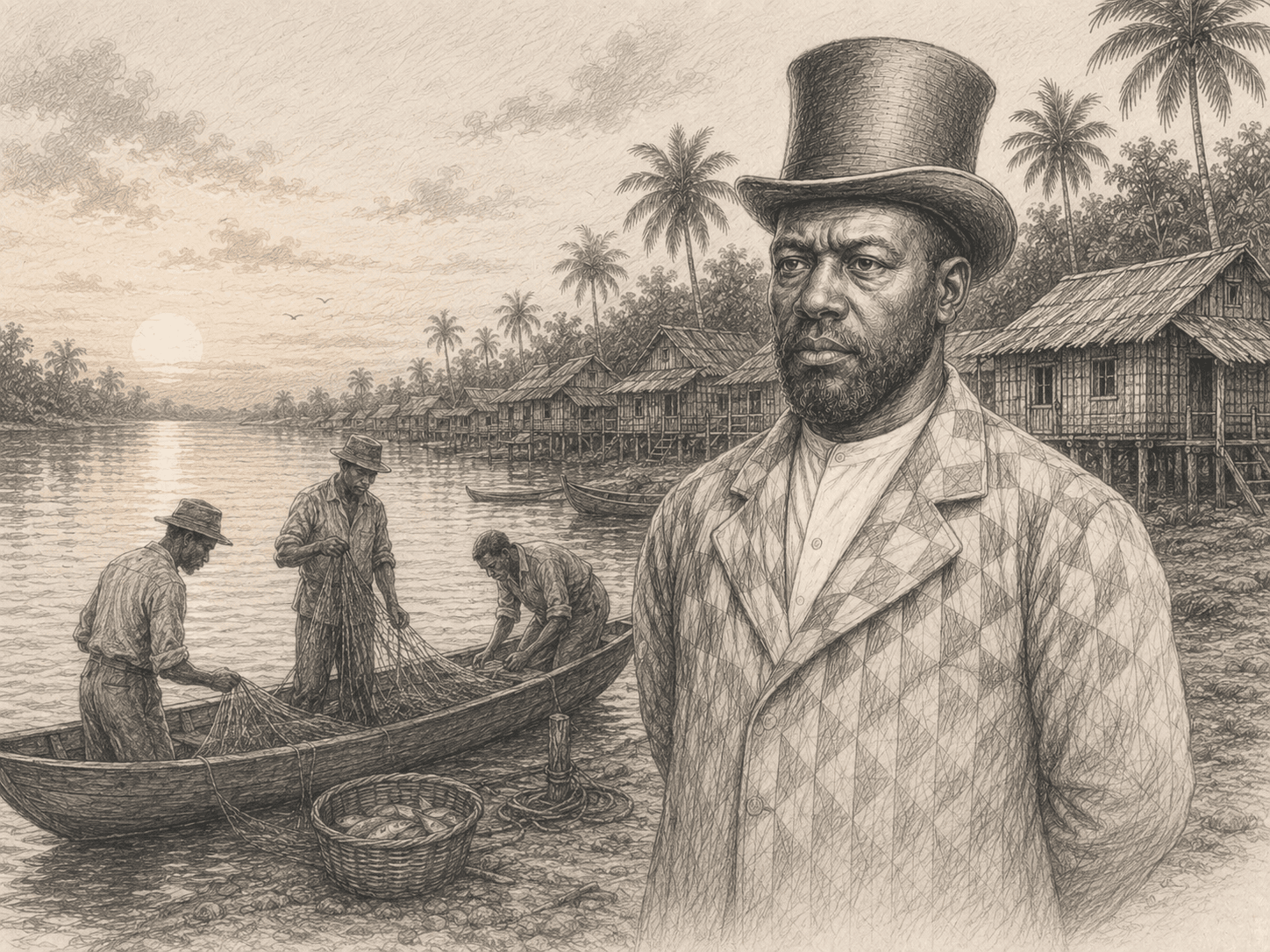
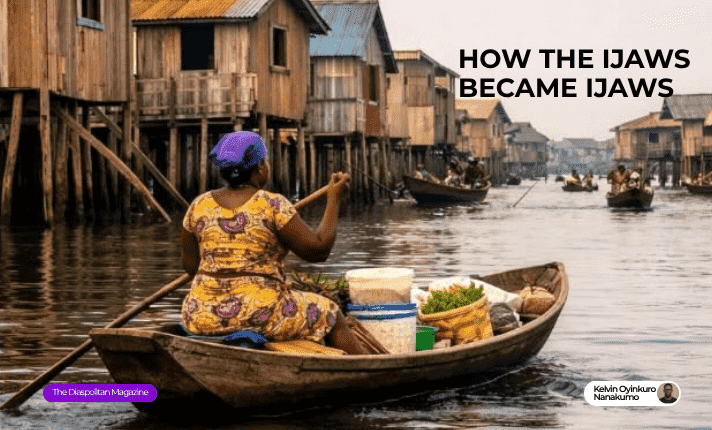

Long before the Niger Delta became associated with oil, modern cities and global commerce, it was already a world shaped by movement. Its rivers and creeks were roads, its islands were settlements, and its mangrove forests connected communities to one another and, eventually, to the wider Atlantic world.
Across this environment, generations of people built societies closely tied to water. Among them were the Ijo, who call themselves Izon but are widely known as Ijaw. The story of how the Ijaws became Ijaws is not that of a single ancestor settling in the Delta. It is broader than that. It is a history of settlement, dispersal, language, interaction and adaptation that unfolded over centuries.
A People Made by the Delta
The Ijaws did not develop as one centralised kingdom. Instead, the Niger Delta became home to numerous communities, clans and political centres connected by language, cultural practices and traditions of origin, while maintaining their own rulers and identities.
The geography of the Delta helped shape this development. Rivers, creeks, islands, mangroves and wetlands made waterways essential for movement. Fishing, farming, hunting and trade all adapted to this environment, and communities gradually established themselves along different waterways.
The result was not one Ijaw state, but a wider network of Ijo-speaking societies. Ijoid, the language group to which Ijo varieties belong, includes Izon varieties as well as Kalabari, Nembe, Ibani and others.
Searching for the Beginning
There is no single, universally accepted account of Ijo origins. Archaeology provides evidence of settlement, linguistics reveals relationships between languages, while oral traditions preserve memories of ancestors, founders and migrations.
Research by historian Ebiegberi Joe Alagoa found that Ijo traditions were preserved through elders, specialists, priests and drummers. Rather than pointing to one simple migration route, these traditions describe several centres of dispersal within the Delta.
This suggests that Ijo society may have developed through movement and settlement within the Delta itself. Archaeological investigations at sites including Onyoma and Ke have sought to compare physical evidence with oral and linguistic traditions, although the chronology of early settlements remains incomplete.
Agadagba-bou and Dispersal
Agadagba-bou is remembered in Ijo traditions as an important early settlement in the Central Niger Delta, associated with ancestral founders and later dispersal. Archaeological research has also examined the site and surrounding settlements.
As populations moved through the Delta, communities became established across different ecological and commercial zones. Kalabari developed around the New Calabar River, Nembe became an important eastern political and commercial centre, Okrika occupied strategic waterways, and Bonny grew into a major maritime state.
These societies developed their own institutions and identities, but remained connected through wider linguistic and historical relationships.
When Waterways Became Highways
The same waterways that separated communities also connected them. Fishing, migration and trade brought settlements into increasingly complex networks. By the late fifteenth century, European merchants had entered existing regional trading systems, and Delta city-states became important intermediaries between inland markets and the Atlantic coast.
Trade strengthened some communities and intensified competition for markets and waterways. Yet commerce did not erase local identities; it often reinforced them.
A Shared World Without One Kingdom
The Ijaw world was never isolated. Communities interacted with neighbouring societies, including Edo-speaking peoples and other Niger Delta populations. They traded, allied, competed and influenced one another. Languages changed, communities moved, and identities evolved through these encounters.
So, how did the Ijaws become Ijaws?
Probably not through one defining moment, kingdom or founding ancestor. Ijo identity developed over generations as communities settled the Niger Delta, maintained connections through language, ancestry and culture, and adapted to a landscape where movement was unavoidable.
The Delta did more than provide the Ijaws with a home. Its rivers shaped their societies, connected their communities and influenced their history.
Their story is therefore not written by one migration or one kingdom, but across many communities and generations, through movement, memory and, above all, water.