
When the British colonised Nigeria, they adopted indirect rule because they could not keep up with the diverse traditional systems on ground. The Yorubas had the Alaafin, Ooni and Olubadan. The Hausas had their Emirs. The Igbos had councils, Obis and Okafors. And in the far south of the Niger Delta, the Nembes had their Amayanabos.
For easier governance, these systems were lumped together. Multiple constitutions were drafted, parliaments and courts created, leaving traditional leaders with little to no legal power. When the British left in 1960, Nigeria retained the federal system introduced in 1954 by the Lyttleton Constitution. Yet traditional leadership remained in many parts, even though the constitution did not recognise or assign roles to it.
This poses a big question: in a country with 774 local government chairmen responsible for grassroots development, what roles do traditional leaders play? Do they work closely with local governments?
The Nembe Example: Ancient Authority Meets Modern Administration
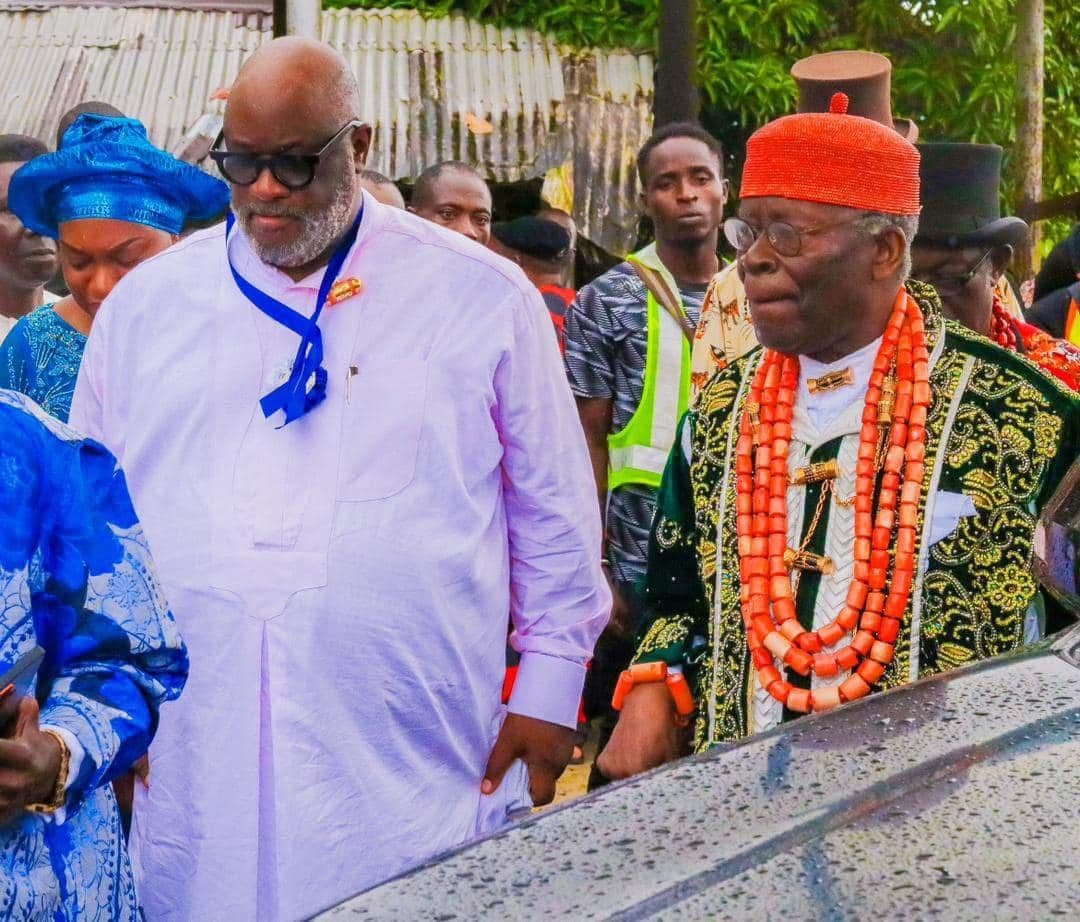
In Nembe Kingdom, this intersection is exemplified by the synergy between His Royal Majesty King Edmund Maduabebe Daukoru, Mingi XII, and Hon. Chief David Alagoa, Chairman of Nembe Local Government Area.
King Daukoru, a Ph.D. holder and former Secretary General of OPEC, represents a rare blend of global statesmanship and traditional custody. Chief Alagoa, former State Commissioner for Agriculture, brings high-level executive experience to the local level. Their partnership shows that the gap between constitutional governance and traditional leadership can be bridged through mutual respect and shared vision.
Infrastructure and Shared Vision
This is most visible in their joint support for the historic Nembe–Brass Road project. While Chairman Alagoa operates within the legal framework of the third tier to deliver the dividends of democracy, King Daukoru provides the social capital and traditional backing required for such a gamechanger to succeed. The King has publicly applauded the purposeful leadership behind the project, noting that it will integrate riverine communities into the state's growth trajectory. This alignment ensures development is not just an administrative directive but a communal movement.
Their collaboration is also vital for peace and stability. Nembe has long navigated deep-seated rivalries between Ogbolomabiri and Bassambiri communities. King Daukoru has remained central to conflict resolution, expressing optimism that these two-century-old differences can be settled through dialogue. By working closely with the traditional institution, Chairman Alagoa's administration can govern in a stable environment where the community itself, not just law enforcement, protects development projects.
A Blueprint for Nigeria's 774 Local Governments
This model offers a blueprint for Nigeria's local governments. The Nembe example proves that when a chairman works with a traditional leader, legal authority combines with cultural legitimacy. King Daukoru serves as guardian of Ijaw history and a voice of resilience, while Chairman Alagoa handles the fiscal and statutory responsibilities of the LGA. Moving in the same direction, they can more effectively advocate for environmental justice and address the challenges of oil exploration affecting their people.
Ultimately, grassroots development requires a unified front. Local government chairmen across Nigeria should look to Nembe to see how an amiable relationship with traditional leaders creates a new, peaceful dawn. When the landowner and the elected administrator work together, development is modern in execution and traditional at heart. This unity is not merely a political preference; it is the most effective path to sustainable growth and communal pride.