
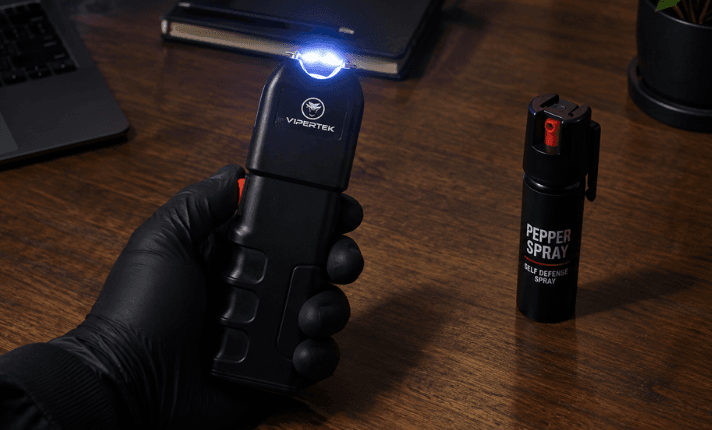

With reports of kidnappings and highway attacks, many Nigerians are asking whether they can legally carry a taser or pepper spray for protection. The law does not give a simple answer.
The Law Is Silent on Tasers
A July 2026 investigation by DUBAWA found that the Control of Small Arms and Light Weapons Act (2021) does not mention tasers, and that the Criminal Code refers only broadly to offensive weapons. One lawyer interviewed for the investigation argued that no one can be prosecuted for possessing a taser because the law does not expressly make it a crime. The report also found that tasers are available to buy, both online and offline.
Pepper Spray: Police and Lawyers Disagree
In a 2023 DUBAWA fact-check, the police spokesperson said the law does not permit individuals to own pepper spray or tasers, but he did not cite a specific law. An earlier police statement relied on Section 417 of the Criminal Code, which deals with being armed with intent to break into a dwelling and commit a felony.
Lawyers consulted by DUBAWA offered a different view. One noted that the Constitution protects the right to life, including self-defence, and that pepper spray is not a firearm banned under the Firearms Act. Another said a police statement alone cannot make possession a crime and that a person's intention matters. A Senior Advocate of Nigeria said using pepper spray for self-defence is lawful unless a specific law or order says otherwise, while using it unjustifiably to attack someone would be an offence. DUBAWA concluded that, as of that 2023 fact-check, no law or executive order denies citizens the use of pepper spray for self-defence.
Why Some Nigerians Want Them
Supporters argue that both devices are less lethal than firearms, which most Nigerians cannot easily or legally obtain. They contend that if the law does not clearly forbid these items, people should not be prevented from protecting themselves.
Why There Are Concerns
There are also risks. DUBAWA documented a case in which a kidnapper used a taser to immobilise a woman before she was blindfolded, beaten and robbed. A neurosurgeon warned that victims may suffer lasting fear or anxiety, and that taser use close to the head can be fatal. Others note that neither device offers much protection against armed groups, and that drawing one could escalate a dangerous situation.
Why This Legal Gap Matters
Where the law is unclear, the outcome may depend on who is interpreting it: a lawyer, a court, or an officer at a checkpoint. A person who believes they are acting within the law may still face questions from the police.
Should the government clearly allow civilians to carry these items, with rules on sales, training and use? Should it restrict them because of the risk of misuse? Or is the current silence sufficient? Where should the line be drawn between personal safety and the state's duty to control weapons?
This article is for general information only and is not legal advice. Please consult a qualified Nigerian lawyer for guidance on your specific situation.