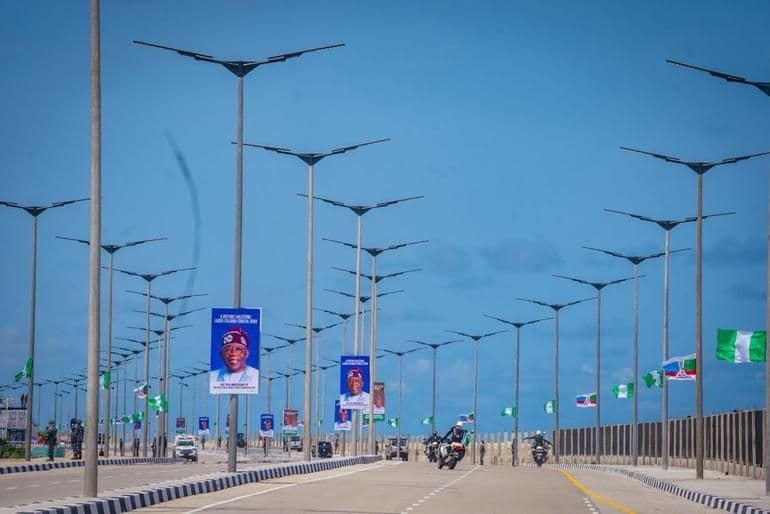
On 26 May 2024, President Bola Ahmed Tinubu flagged off construction of the Lagos-Calabar Coastal Highway at Ahmadu Bello Way, Victoria Island, Lagos. Planned to cut across nine states, the highway is presented as a gateway to open up rural coastal communities in the Niger Delta and the wider South to both infrastructural and human development. Yet it has drawn mixed reactions, with opposition figures questioning its transparency, feasibility and cost at a time of economic strain.
An Idea Older Than Independent Nigeria
The idea of a federal highway linking coastal communities to major commercial centres is not new. Historical accounts trace it to the 1950s, when Chief Festus Okotie-Eboh, then Minister of Finance, was associated with a proposal for a road network connecting the coast to the hinterland. Its scale and complexity meant it never materialised.
The concept resurfaced under the late President Umaru Musa Yar'Adua, who saw an Atlantic coastal highway as part of a broader Niger Delta development vision. His death in 2010, less than three years into his presidency, cut that ambition short.
His successor, President Goodluck Jonathan, revisited it. In 2010, a related coastal road project was reportedly awarded to Levant Construction Ltd. In November 2014, his administration signed an agreement with China Civil Engineering Construction Corporation for a proposed coastal road covering 10 states and 22 stations, at an estimated cost of about $11.97 billion, according to reports. The project did not proceed to full-scale construction before Jonathan left office in 2015.
In 2016, under the late President Muhammadu Buhari, discussions resumed. Reports at the time indicated a renegotiated estimate of about $11.1 billion. Again, full-scale construction did not begin.
The Tinubu Administration's Push
Under President Tinubu, the proposal was revived and moved to implementation. At the flag-off, the Federal Government described it as a transformative project for transportation, tourism and economic growth.
Initially presented as a 700-kilometre corridor spanning Lagos, Ogun, Ondo, Edo, Delta, Bayelsa, Rivers, Akwa Ibom and Cross River, its proposed route is intended to improve connectivity between coastal settlements and commercial centres, creating opportunities for trade, tourism and employment.
Construction has since advanced in phases. On 12 December 2025, the Federal Government temporarily opened a completed 30-kilometre stretch of the first phase to ease movement during the festive period. By August 2026, reports indicated work continuing on the Ogun-Ondo section, with concrete pavement progressing in Ogun and foundation works ongoing in parts of Ondo. Even so, building the full corridor remains a formidable undertaking.
Why Critics Are Concerned
The highway has attracted sustained criticism, particularly over cost, priority and procurement.
Former Cross River State Governor Donald Duke, who later became the presidential candidate of the Peoples Redemption Party, has been among the most vocal. "Nigeria cannot afford the Lagos-Calabar Coastal Highway. I don't think the road will go beyond Epe," he argued. For Duke, electricity, healthcare and education should take precedence, and existing arteries such as the East-West Road deserve urgent rehabilitation before new mega-projects are committed.
Former Labour Party presidential candidate Peter Obi raised similar concerns at the start of construction: "So why embark on another huge project that will not be completed in the next 20 or 30 years? To do so will only exacerbate the problem of abandoned and uncompleted projects that are not contributing to economic growth and overall development." Obi has pointed to the broader pattern of unfinished infrastructure while existing roads deteriorate, and to the immediate pressures of security, healthcare, education and poverty reduction. He also described the demolition of properties and businesses along the proposed alignment as distressing for affected livelihoods.
Former Vice-President Atiku Abubakar has questioned the transparency of the procurement process, the overall cost and the financing arrangements, calling for greater accountability and clarity on how the contract was awarded. Others have raised questions about environmental assessments, the impact on coastal communities, and whether the investment offers sufficient value.
Together, these concerns have kept the highway at the centre of national debate, one that extends beyond concrete and asphalt to questions about infrastructure priorities, public finance and the protection of communities.
Why Supporters See Promise
In parts of the Niger Delta, the project has been welcomed as a chance to address longstanding infrastructure gaps and improve access to rural and riverine areas long hampered by poor road networks.
Among its defenders is Kingsley Kuku, former Presidential Adviser on Niger Delta Affairs and former Chairman of the Presidential Amnesty Programme. He credits President Tinubu with political will where preceding administrations hesitated.
"Nobody has gone directly into these issues until the current president, President Bola Ahmed Tinubu, and he has taken the bull by the horns. He has shown political will, and he said, 'I am going to construct Lagos-Calabar Coastal Highway,' and he has started," Kuku said.
"You need political will to construct roads like this, highways like this. And President Bola Ahmed Tinubu has shown exactly just that. For me, I am with him on all fours on this. I will support the president. My people will support the president. The Niger Delta people are happy about this project," he added.
For Kuku and other proponents, cost and difficult terrain, including Bayelsa's swampy stretches, should prompt engineering solutions rather than abandonment. He also argues that rehabilitating the East-West Road should be treated as a separate priority, not as a reason to shelve the coastal corridor. In this reading, the highway could unlock trade, tourism, jobs and better access for communities that have remained hard to reach.
Whether those benefits materialise will depend on completion, quality of execution and the economic activity that grows along its route.
A Long Road Ahead
Ultimately, the Lagos-Calabar Coastal Highway is a major undertaking whose lineage spans several administrations. While earlier governments explored related proposals, the Tinubu administration has moved it into construction. Its supporters see a chance to advance coastal development and regional connectivity. Its critics continue to ask whether, amid competing national needs, the cost, process and timing are right.
For Nigeria and its diaspora watching infrastructure choices shape opportunity at home, the answer will be written not in flag-off ceremonies, but in how transparently, sustainably and completely the road is built.
Despite the criticism, several stakeholders in the Niger Delta have welcomed the project and expressed support for the administration's decision to move ahead with construction. For these supporters, the highway represents an opportunity to address longstanding infrastructure gaps, improve access to rural and riverine communities and connect parts of the region that have struggled with inadequate road networks.
Among those who have defended the project is Kingsley Kuku, former Presidential Adviser on Niger Delta Affairs and former Chairman of the Presidential Amnesty Programme. Kuku praised President Tinubu for demonstrating the political will to pursue a project that, according to him, had been discussed by preceding administrations for decades without reaching full-scale construction.
Speaking in defence of the President's decision, Kuku said, "Nobody has gone directly into these issues until the current president, President Bola Ahmed Tinubu, and he has taken the bull by the horns. He has shown political will, and he said, 'I am going to construct Lagos-Calabar Coastal Highway,' and he has started."
He further declared, "You need political will to construct roads like this, highways like this. And President Bola Ahmed Tinubu has shown exactly that. For me, I am with him on all fours on this. I will support the president. My people will support the president. The Niger Delta people are happy about this project."
Kuku's position is that the financial cost and engineering challenges associated with the highway should not automatically become reasons to abandon a development project intended to improve connectivity across the Niger Delta. He has argued that difficult terrain, including the swampy areas of Bayelsa State, should encourage the development of engineering solutions rather than prevent coastal communities from benefiting from major infrastructure. He has also maintained that the East–West Road should be rehabilitated as a separate project instead of being treated as a replacement for the coastal highway.
His support reflects a broader argument among proponents of the project: that the Niger Delta's development needs require sustained investment and that a coastal highway could provide opportunities for trade, tourism, employment and improved access to communities that have remained difficult to reach by road. However, the extent to which these benefits will be realised will depend on the completion of the project, the quality of its execution and the economic opportunities that emerge along the route.
Ultimately, the Lagos–Calabar Coastal Highway remains a major infrastructure undertaking whose history stretches across several administrations. While earlier governments explored related proposals, the Tinubu administration has taken the project into its current phase of construction. Its supporters see this as an opportunity to advance coastal development and improve regional connectivity, while its critics continue to question the cost, transparency, and wisdom of committing such substantial resources to the project amid competing national needs.