
Bayelsa has a peculiar relationship with water.
It has rivers. It has creeks. It has the Atlantic Ocean. Wetlands stretch in every direction. It also receives abundant rainfall; Akassa in Bayelsa is often cited as one of the wettest places in Nigeria. So how does a state with this much water still face a water supply crisis?
The answer is straightforward: not all water is potable.
Much of the water that surrounds us is either salty, polluted or unsafe for direct consumption. For oil-producing communities, the challenge is more acute. Studies have found contamination in surface and groundwater sources in parts of the state, including petroleum hydrocarbons and other substances that render water unsafe to drink.
When Rain Is Not Enough
Bayelsa receives plenty of rain, but rainfall does not automatically translate into drinking water. For rain to become potable, it requires a complete system: collection, adequate storage, effective treatment and proper distribution.
This is where the problem becomes more complex.
Bayelsa has a water administration and continues to budget for water projects, including the construction and rehabilitation of facilities. Yet having water infrastructure is one thing; having a functioning system that consistently delivers treated water to homes is quite another.
The Meruwa Economy
So, what do people do?
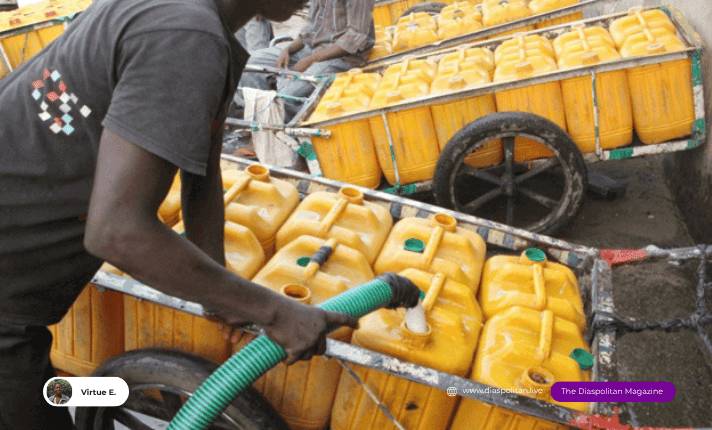
They call them meruwa. For many households, these mobile water vendors have become part of everyday life. They move from house to house, delivering water in kegs. One keg can sell for about ₦150. A household using ten kegs a day spends ₦1,500 daily. Over 30 days, that amounts to ₦45,000 a month.
This is not water for luxury. It is water for the basics: bathing, cooking, laundry, cleaning and flushing toilets.
That is why the recent announcement that Bayelsa passed the World Bank’s assessment for a potable water project in Yenagoa and surrounding communities is welcome news. According to Governor Douye Diri, the next stage will involve the World Bank working with state officials to map Yenagoa and neighbouring communities in preparation for water infrastructure deployment.
This is an important step. But the real victory will not be passing an assessment.
The real victory will be the day a Bayelsan can turn on a tap and have a reliable supply of potable water without first calling a meruwa. In a state so richly surrounded by water, paying daily to live should not be normal.
This could finally be the beginning of change.