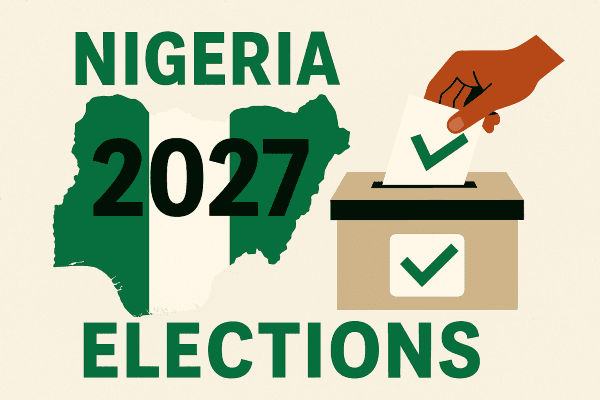

Ademola Adeleke has been returned as Governor of Osun State after the 15 August 2026 election. Yet the issues that shaped the contest (violence, vote buying and a surprising political realignment) have raised bigger questions about the credibility of Nigeria’s democracy ahead of the 2027 general election.
A Familiar Pattern
Elections in Nigeria tend to make headlines, often because they are treated as a do-or-die affair. The stated aim remains constant: to allow every citizen to exercise their democratic franchise.
Since the return to civilian rule in 1999, Nigeria has seen recurring electoral irregularities, including violence, vote buying and rigging. With that history in mind, the 2026 Osun election drew national attention. Voters and observers were looking beyond Osun, towards 2027, and towards what the current administration might deliver, despite persistent fears of irregularities and repeated presidential assurances of free and fair elections.
Violence and Vote Buying in the Build-up
In the weeks before the election, Osun recorded a worrying number of violent incidents. Some were described as gang-related, others as election-related. In the days leading up to voting, several people were reportedly wounded or killed in sporadic clashes across different constituencies.
On election day, the most widely reported concern was vote buying. Allegations were made against both camps: that of the All Progressives Congress (APC) candidate and that of the incumbent governor, who contested on the platform of the Accord Party.
Victory Speech and Political Realignment
Despite these concerns, the governor, in his acceptance speech, thanked the President for allowing democracy to prevail, stressing that the will of the Osun people had prevailed. His supporters echoed that view, arguing that the result reflected the decision of the electorate. Other opposition parties, looking towards 2027, drew a different conclusion. For them, the result showed that voters are prepared to vote against the party in power at the centre when presented with a credible alternative.
Then came the twist. The returning governor said he would continue to give his unwavering support to the ruling presidential party, the APC, despite having won on the Accord Party platform. That statement immediately fuelled speculation about alliances and permutations ahead of 2027, and sparked wide debate about the direction of the presidential race.
The 2027 Permutations
The calculations have already begun. Many analysts read the governor’s position as part of a deliberate move by the presidency to strengthen its prospects in 2027. With the APC already controlling a significant number of state governments, the endorsement of a sitting governor from another party could make its position appear even more formidable.
Whether that translates into votes will depend on what happens between now and 2027: on the credibility of the electoral process, on how parties manage internal alliances, and on whether voters believe their votes will be respected.
For now, Osun has not just produced a winner. It has set the tone for the conversations that will define Nigeria’s democracy at the next general election.