
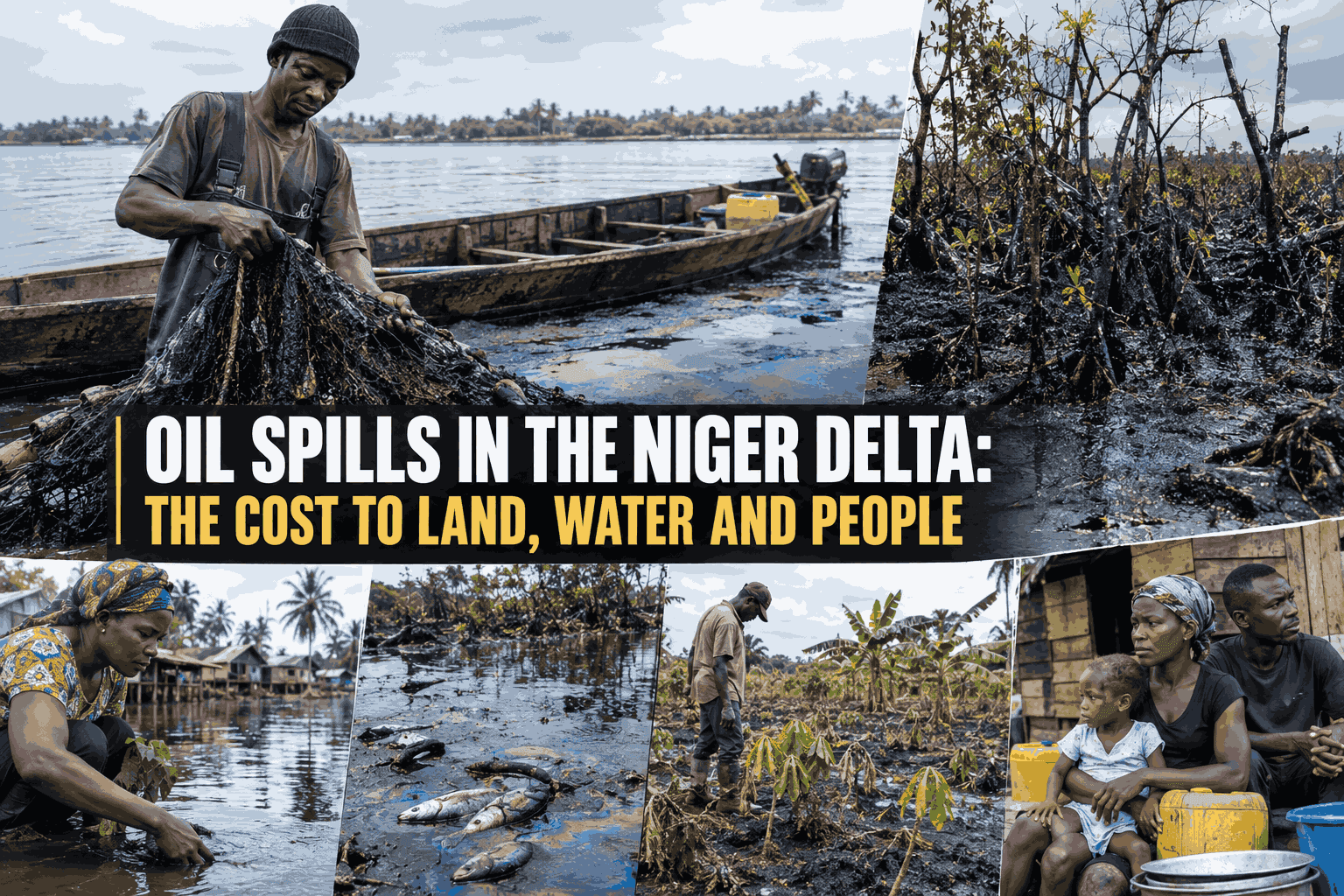

The Niger Delta is one of the world's richest ecological regions. Spanning about 70,000 square kilometres across Bayelsa, Rivers, Delta, Akwa Ibom, Cross River, Edo, Ondo, Imo and Abia States, it holds Africa's largest mangrove forest, vast freshwater swamps, tropical rainforests and an extensive network of rivers. More than 30 million people depend on these ecosystems for food, water and livelihoods.
Since commercial crude oil production began in Oloibiri, Bayelsa State, in 1956, the region has powered Nigeria's economy. It still produces the majority of the nation's oil. Yet decades of exploration, pipeline failures, illegal refining, vandalism and operational accidents have left thousands of spills. The damage extends far beyond polluted rivers and forests. It is eroding biodiversity, food security, public health and the livelihoods of millions.
When the Soil Loses Its Fertility
One of the most immediate impacts of oil spills is on farmland. When crude oil coats the soil, it blocks oxygen and water from reaching plant roots and introduces toxic hydrocarbons. Fertility falls, crops fail, and without proper remediation, some land can take 10 to 30 years to recover.
Communities in Oloibiri, Kolo Creek, Biseni, Gbarain, Nembe and Southern Ijaw in Bayelsa; Bodo and Ogoni in Rivers; Uzere in Delta; and Mbo in Akwa Ibom have faced repeated contamination. The crops affected are staples: cassava, yam, plantain, cocoyam, vegetables, maize and oil palm.
Gas flaring, acid rain, deforestation, sand mining and bush burning further degrade the land. The result is a shrinking agricultural base in a region where farming has sustained families for generations.
Water and Forests Under Pressure
Oil on rivers and estuaries blocks sunlight and reduces oxygen in the water. Fish, shrimp, oysters, periwinkles and crabs either die or suffer long-term reproductive damage.
Fishing communities in Bonny, Andoni, Bodo, Opobo, Brass, Akassa, Sangana, Foropa, Burutu, Warri South-West and Ibeno report declining catches over decades. Mangroves, which serve as breeding grounds for fish and natural barriers against coastal erosion, have been badly affected.
These ecosystems are already stressed by climate change, coastal erosion, plastic pollution, industrial waste and excessive dredging. That makes natural recovery slower and more uncertain.
Livelihoods, Loss and Migration
Agriculture and fishing remain the main occupations in rural Niger Delta communities. Repeated contamination has sharply reduced household incomes. Farmers lose harvests. Fishermen spend longer hours at sea for smaller catches.
In Bodo, Goi, K-Dere, Ejamah-Ebubu, Ogale, Odioma and Koluama, major spills have triggered long-term hardship. With fewer opportunities at home, many young people migrate to cities, adding to urban unemployment and social strain. As local food production falls, prices rise, placing further pressure on households across the region.
The Health Burden
Oil in rivers and groundwater exposes people to chemicals such as benzene, toluene and lead. Prolonged exposure has been linked to respiratory illnesses, skin diseases, eye irritation, and damage to the liver and kidneys. There are also concerns about reproductive complications and certain cancers.
Gas flaring releases carbon dioxide, methane, sulphur dioxide and nitrogen oxides into the air. These pollutants can cause persistent coughing, breathing difficulties, headaches and eye irritation. Where groundwater is affected, drinking contaminated water increases the risk of waterborne disease and long-term health problems.
What Prevention and Restoration Must Look Like
Preventing future spills will require stronger regulation, better technology and community involvement.
Oil companies need to replace ageing pipelines, install modern leak-detection systems, carry out routine inspections and respond to spills immediately. Regulatory bodies, including the National Oil Spill Detection and Response Agency [NOSDRA] and the Nigerian Upstream Petroleum Regulatory Commission [NUPRC], must strengthen monitoring and enforce compliance.
Government at all levels should fund large-scale restoration, including mangrove replanting, wetland rehabilitation and soil remediation. Local communities should be supported to report leaks quickly, discourage pipeline vandalism and adopt sustainable practices. Public awareness and environmental education must also be expanded.
The Next 10 to 30 Years
Without stronger action, low-lying coastal areas in Brass, Nembe, Southern Ijaw, Akassa, Foropa, Sangana, Bonny, Andoni, Escravos, Burutu and Ibeno remain highly vulnerable. The combined impact of oil pollution, erosion, rising sea levels and climate change threatens further loss of mangroves, saltwater intrusion into freshwater sources, declining fisheries and the displacement of coastal residents.
Experts warn that delaying restoration will deepen ecological damage, economic losses and health risks across the Niger Delta.
A Shared Responsibility
Oil spills remain one of the Niger Delta's greatest environmental challenges. The cumulative effects of crude oil pollution, gas flaring, illegal refining, industrial waste, climate change and habitat loss are undermining the region's ecological balance and the lives of millions.
Protecting the Niger Delta requires sustained collaboration between government, oil companies, communities, researchers and civil society. With investment in modern infrastructure, enforcement of regulations, ecosystem restoration and support for sustainable livelihoods, Nigeria can reduce future pollution, safeguard biodiversity and preserve one of Africa's most important environmental and economic regions for generations to come.