
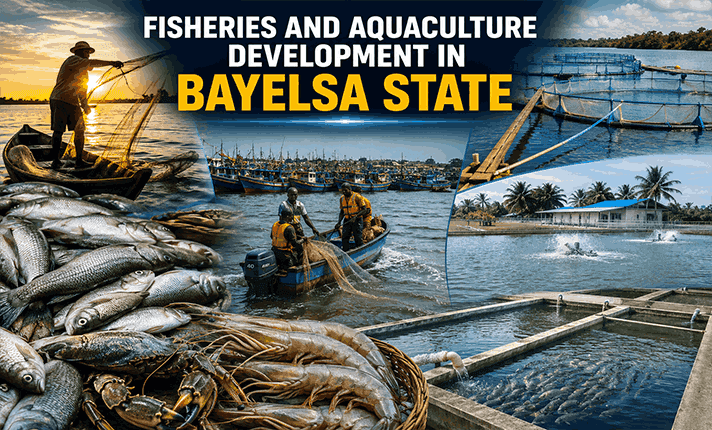

Bayelsa State holds one of Nigeria's richest aquatic environments. With its network of rivers, creeks, estuaries, wetlands and mangrove forests, it has long depended on fishing as a traditional occupation.
In communities such as Brass, Nembe, Southern Ijaw, Ekeremor, Ogbia, Sagbama and Kolokuma/Opokuma, fishing has sustained households for generations. It still does. It provides food, employment and income. As Nigeria seeks to diversify beyond oil and gas, Bayelsa's abundant water resources offer a clear path into a thriving blue economy.
A Natural Advantage
The state's geography is its strength. Bayelsa connects to the Atlantic Ocean through the Bight of Bonny and is crossed by major waterways, including the Niger, Nun, Forcados, Brass, and Sangana rivers, along with Taylor, Epie, and Kolo creeks and hundreds of smaller channels.
These systems support a rich diversity of species. Catfish, tilapia, croaker, barracuda and bonga fish. Shrimps, prawns, oysters, crabs, periwinkles and crayfish. Together they form a strong foundation for commercial fishing, fish processing, aquaculture and seafood exports.
Food, Jobs and Livelihoods
Fish remains one of the most affordable sources of protein for millions of Nigerians. In Bayelsa, the value chain runs deep. Fishermen, fish farmers, processors, transporters, traders, net makers, boat builders, cold-room operators and exporters all depend on it.
Aquaculture has grown rapidly. Catfish and tilapia farming in particular now offers a reliable, year-round supply. It reduces pressure on wild stocks and creates profitable opportunities for young entrepreneurs and women. More local production also means less dependence on imported fish and stronger local food systems.
The potential goes well beyond catching and selling. Hatcheries, feed production, seafood processing, cold-chain logistics, marine transport, packaging, export businesses, recreational fishing and eco-tourism all require closer attention. Even the sustainable management of mangroves and wetlands can improve biodiversity while supporting community livelihoods.
Yet challenges persist. Oil pollution, illegal fishing, flooding, limited cold storage, poor access to finance, weak road infrastructure and climate change continue to affect productivity. Unlocking the sector's full value will require environmental protection, modern technology, investment and stronger fisheries management.
What the Future Could Look Like
Bayelsa has the natural assets to become Nigeria's leading centre for aquaculture and the blue economy. What is needed now is coordinated investment.
Government agencies, private investors, universities and development partners can work together to establish modern hatcheries, aquaculture research centres, seafood processing zones, feed mills, marine training institutes and export terminals. Greater investment in floating cage culture, recirculating systems, digital monitoring, solar-powered cold storage, improved fishing ports and youth entrepreneurship programmes would raise production significantly and create thousands of jobs. Sustainable coastal management and marine conservation will be essential to preserve stocks for future generations.
In short, fisheries and aquaculture represent one of Bayelsa's greatest opportunities for inclusive growth and food security. Blessed with an Atlantic coastline, major rivers, productive wetlands and a long fishing tradition, the state has all the resources required to lead in seafood production. By investing in technology, sustainability, education, infrastructure and value-added processing, Bayelsa can turn its aquatic wealth into a lasting engine of prosperity for its communities, for Nigeria's food supply and for Africa's growing blue economy.