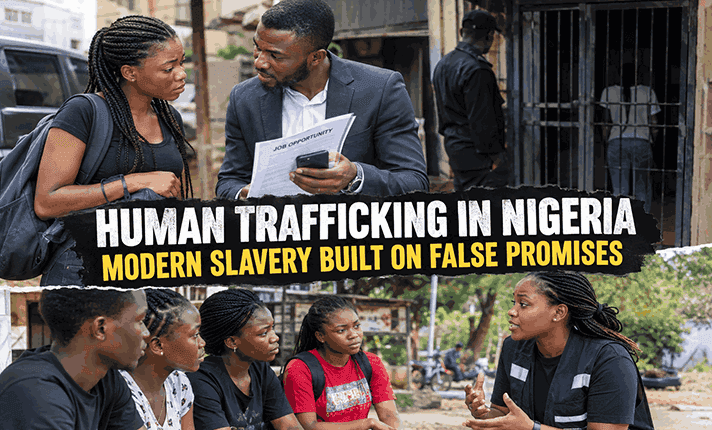

Human trafficking is the illegal trade of people for exploitation. In Nigeria, it is one of the most persistent crimes affecting both adults and children.
Victims are often recruited with promises of well-paying jobs, quality education, or a better life abroad. Instead, they are forced into labour, sexual exploitation, organ harvesting, or domestic servitude.
Major destination countries for trafficked Nigerians include Italy, Libya and Saudi Arabia, with many others across Europe and the Middle East.
To address the crisis, the National Agency for the Prohibition of Trafficking in Persons, NAPTIP, was established in 2003. Despite its work, trafficking remains a major challenge, driven by economic desperation and sophisticated criminal networks.
Why It Persists: The Root Causes
Several factors fuel human trafficking in Nigeria.
Poverty remains the leading driver. For many young people, particularly in rural communities, “Japa” (the desire to migrate abroad) is seen as the only path to a better future.
Unemployment and limited economic opportunities make people vulnerable to traffickers’ offers.
Lack of education and public awareness means many do not know the risks of irregular migration.
Other contributors include peer pressure, broken homes, corruption, porous borders, and social media. Fake travel agents now advertise cheap, “guaranteed” travel opportunities online.
In some cases, the exploitation starts at home. Family members facilitate or encourage the trafficking of relatives in exchange for financial gain.
How Traffickers Operate
Traffickers use deception and coercion to control their victims.
Some pose as legitimate travel consultants, recruitment agencies, or modelling organisations, promising jobs, scholarships, or visas abroad. Others use spiritual or ritual threats to enforce obedience, a tactic frequently reported in cases involving Europe.
The most common route is overland across the Sahara Desert to Libya, followed by dangerous Mediterranean crossings in overcrowded boats. Some victims are also flown out using forged documents.
On arrival, traffickers often confiscate passports and force victims to work to “repay” the cost of their journey, trapping them in cycles of debt and exploitation.
The Human and National Cost
The consequences are severe for individuals and for Nigeria.
Victims frequently suffer physical injuries, sexual abuse, unwanted pregnancies, and infectious diseases including HIV. Many endure long-term psychological trauma: depression, anxiety, and stigma on returning home. Families are left grieving, in debt, or caring for survivors with complex needs.
Nationally, trafficking damages Nigeria’s international reputation and depletes the workforce by removing young, productive people. It also strengthens organised crime, fuels prostitution and forced labour, and spreads communicable diseases. Profits from trafficking are often channelled into other criminal activities, compounding security challenges.
What Must Be Done
§ Eradicating trafficking requires a coordinated response from government, communities, civil society and individuals.
§ The government must prioritise job creation, strengthen enforcement of anti-trafficking laws, and ensure traffickers are investigated, prosecuted and punished.
§ NAPTIP and NGOs should expand public education on the dangers of irregular migration and deceptive recruitment.
§ Parents and guardians should verify any travel agent or recruiter before entrusting them with a child or relative.
§ Border security must be improved to reduce illegal movement.
§ Rescued victims need comprehensive support: rehabilitation, counselling, vocational training, and pathways to reintegration.
Conclusion
Human trafficking thrives on poverty, unemployment, ignorance, and the promise of a better life elsewhere. It threatens the lives, dignity and future of countless Nigerians.
By creating economic opportunity, enforcing the law, raising awareness, and supporting survivors, Nigeria can significantly reduce trafficking and protect its citizens. Ending this modern form of slavery will take a united effort from government agencies, communities, families and individuals — to build a safer and more prosperous future for the next generation.