

Follow our weekly build-up to the 2027 general election, as we track political rhetoric, debates, campaigns and alliances ahead of the much-anticipated polls.
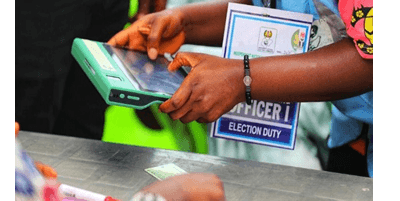
On 17 October 2026, voters across Kogi State's 21 local government areas went to the polls to elect chairmen and ward councillors.
The exercise, held across all 21 councils, was widely viewed as another bellwether in the build-up to the 2027 general election. Attention focused on several key measures: voter turnout, electoral coordination, security, credibility of the process, and, crucially, the performance of the political parties.
Observers Report: Security and Administration
The civil society organisation Conscience for Human Rights and Conflict Resolution, CHRCR, monitored the election and released an observer report on 19 October 2026, signed by its Executive Director, Idris Miliki Abdul.
On security, the organisation stated:
"There was present Security personnel in many polling units observed early enough; which is commendable."
It also noted:
"Despite one or few hiccups observed as enumerated above in the election, the process was peaceful."
Security has remained a paramount concern in the build-up to 2027, particularly in politically contested states where margins are narrow. This concern has been heightened by reports of election-related violence and loss of lives around the Osun State governorship election, which raised broader questions about the safety of voters and electoral stakeholders.
On credibility, observers offered mixed assessments. While the exercise was considered credible in some quarters, concerns were raised about administration, particularly the late arrival of materials.
CHRCR questioned whether peace alone equates to a free and fair process. In its report, the organisation stated:
"Elections were held in some polling units and while many polling units observed did not have election officials and materials; even where they were available, they did come late as to the time announced by SIEC, even in Lokoja, the state headquarters."
These observations raised questions about electoral preparedness, participation, and the ability of eligible voters to exercise their franchise without unnecessary difficulty.
KOSIEC and the Official Results
Responding to questions of credibility, KOSIEC Chairman Mamman Nda-Eri said:
"Our responsibility as an electoral management body is not to decide who wins or loses, but to provide a fair, transparent and credible process through which the electorate can make their choices."
On the results, he stated:
"Accordingly, I hereby confirm, on behalf of the Kogi State Independent Electoral Commission, the successful candidates as duly returned by the respective Returning Officers, in accordance with the applicable electoral laws and guidelines."
He subsequently announced the results on Sunday, 18 October 2026, declaring the All Progressives Congress, APC, winner of all 21 chairmanship seats and 239 councillorship seats.
Reading Kogi Ahead of 2027
The Kogi results represent another important data point in the political calculations ahead of 2027. The APC's clean sweep across the 21 local government areas underlines its organisational strength in the state as incumbent President Bola Ahmed Tinubu prepares for the next presidential contest. Yet a local government outcome should not, on its own, be taken as a definitive indicator of presidential preferences, where voter motivations, alliances and campaign strategies often differ.
The Osun State governorship election offers a useful counterpoint. The APC lost that contest to the Accord Party, whose candidate, Ademola Adeleke, subsequently pledged support for the APC's presidential candidate ahead of 2027. The development highlights the growing importance of cross-party alliances and the reality that competition at state level does not preclude national cooperation.
As the political landscape evolves, the 2027 contest is shaping up to be defined by party structures, alliances, voter mobilisation and the ability to canvass effectively. While the APC's performance in Kogi offers one perspective on its current political standing, developments in Osun show that electoral competition can produce outcomes that go beyond simple wins and losses.
Ultimately, the question is not simply which party wins at the local or state government level, but how those results translate into broader support when Nigerians vote in 2027. With alliances taking shape and political interests increasingly intersecting across party lines, the road to the presidential election promises to be interesting. Much will depend on how parties consolidate support, engage voters, and turn political calculation into actual votes.