
When Nigeria's Electricity Act 2023 opened the space for states to take a more direct role in generation and distribution, Bayelsa moved early.
The state established its own electricity regulatory framework, set up the Bayelsa State Electricity Regulatory Authority (BYERA) and built a 60-megawatt gas turbine that now powers much of the Yenagoa metropolitan area.
But Bayelsa is not stopping at generation and regulation. It is now turning to research.
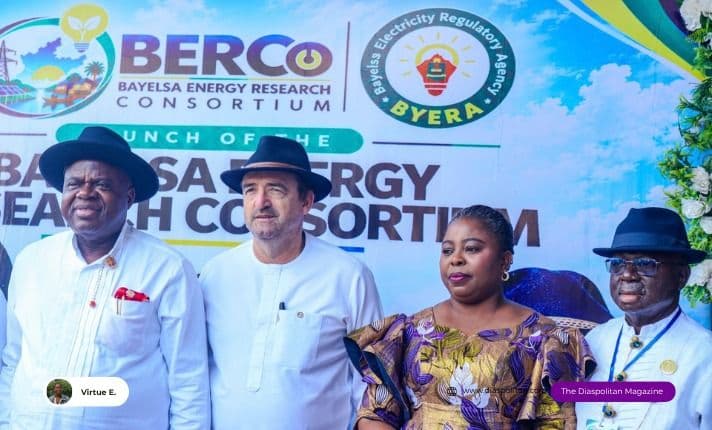
That next phase took shape in Yenagoa with the launch of the Bayelsa Energy Research Consortium (BERCo), which brings together government, regulators, researchers, development partners and other stakeholders to build the knowledge base for the state's evolving energy sector.
Building a Market Without Data
For BYERA's Director General, Dr RosaLyn Dressman, one of the central challenges is the lack of reliable data. Since August 2025, BYERA has worked to lay the foundations of a functioning state electricity market. Within 13 months, the authority conducted licensing and market entry vetting, issued its first licence to the Bayelsa Electricity Distribution Company (BYEDC) and put in place a digital platform for customer engagement, including a system to help consumers track complaints and connect with relevant service providers.
With those foundations in place, BERCo is expected to provide a platform for research and collaboration among government, academia, industry and other stakeholders. Its work will inform decisions around electricity planning, renewable energy resources, investment, technology and access.
Power Beyond Yenagoa
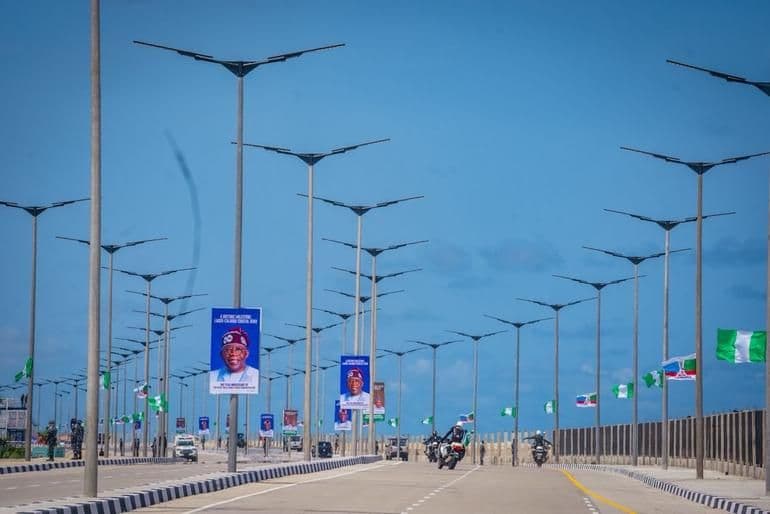
The need to extend electricity beyond the state capital was a recurring theme at the launch. The Managing Director of BYEDC pointed to the recently constructed Nembe-Brass road as an opportunity to make rural electrification more feasible by improving access to previously isolated communities. He stressed, however, that rural electrification must become investment-driven rather than permanently dependent on government funding.
Research through BERCo is expected to explore how to connect isolated creek communities and develop energy solutions suited to Bayelsa's riverine geography, with improved access potentially opening new opportunities for economic activity in rural areas.
Germany's Role
Germany will be part of that effort.
Germany's Consul General in Lagos, Daniel Krull, said Germany is keen to help Bayelsa explore its energy potential. Drawing on Germany's own experience of responding to energy challenges after ending its dependence on Russian oil, Krull said German expertise could contribute to Bayelsa's search for solutions.
He also highlighted Germany's role in supporting Bayelsa's inclusion in an energy programme being implemented by the German development agency, Deutsche Gesellschaft für Internationale Zusammenarbeit [GIZ] GmbH.
According to a GIZ representative at the launch, the programme has €17.7 million in support from the European Union and €17.9 million from Nigeria's Federal Ministry of Power, with Bayelsa among five states selected to benefit.
The support will cover areas including an Integrated Resource Plan, a comprehensive State Integrated Electricity Policy, regulatory development, renewable energy resource studies, stakeholder and public engagement, communication planning and capacity building.
Knowledge as Foundation
For Krull, however, the foundation of these interventions is knowledge. "Data is not everything, but without data, everything is nothing," he said, urging the state government to remain committed to the consortium.
He also reflected on his experience as Germany's ambassador to Ghana, where he observed advances in solar energy. He suggested that Bayelsa could explore opportunities that combine solar power with agriculture, while noting that such initiatives would require the involvement of relevant institutions and stakeholders.
Declaring the consortium open, Governor Douye Diri described research as the bedrock of development. He said universities and research institutions must return to their fundamental purpose of solving real-world problems and argued that sustainable development could not be achieved without strong research systems.
The governor also credited BYERA's leadership and its collaboration with the German government for bringing BERCo to life, saying the state would continue to deepen the relationship.
The launch featured a presentation by Dr Dieter Teckhaus on energy storage technologies, including lithium batteries, vanadium redox flow batteries, hydrogen storage and large-scale battery systems. The presentation highlighted technologies that could become relevant as Bayelsa expands generation and explores ways to store power from different sources.
More Than Another Institution
For Bayelsa, BERCo therefore represents more than another institution.
The state has begun building the infrastructure to generate and regulate electricity. It is now attempting to build the knowledge infrastructure to determine how those systems can expand, how its renewable resources can be harnessed, and how power can reach communities beyond its urban centres.
As Ambassador Krull put it at the launch: "If you want to go fast, go alone. If you want to go far, let's go together."