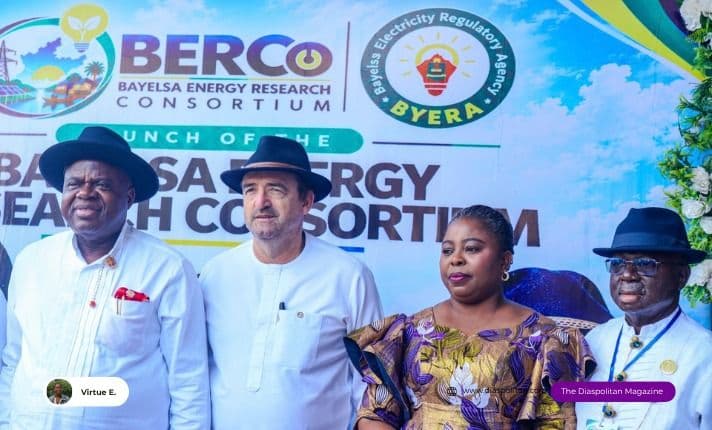

The MKO documentary premiered at the Wole Soyinka Centre for Culture and Creative Arts, formerly the National Theatre, in Iganmu, Lagos, as part of Nigeria's 66th Independence anniversary celebrations. In attendance were President Bola Ahmed Tinubu, First Lady Oluremi Tinubu, alongside other political, cultural and creative figures.
The documentary first premiered internationally on 12 June 2026 at the Sheffield International Documentary Festival (Sheffield DocFest) in the United Kingdom, exactly 33 years after the 12 June 1993 presidential election, before its Nigerian premiere on 1 October. The 108-minute documentary was directed and produced by Nigerian-American filmmaker Ose Oyamendan, alongside producer Veronique Bernard.
It features interviews with key actors connected to the June 12 story, including former Heads of State General Ibrahim Babangida, General Abdulsalami Abubakar and General Olusegun Obasanjo, Nobel laureate Professor Wole Soyinka, Abiola's running mate Baba Gana Kingibe, President Bola Ahmed Tinubu, as well as activists, journalists, diplomats and members of Abiola's family.
A Unique and Delicate History
The MKO story remains a unique and delicate one in Nigeria's democratic history. Its uniqueness stems not only from the political events surrounding the June 12 election, but also from the unanswered questions and conflicting accounts surrounding Abiola's death.
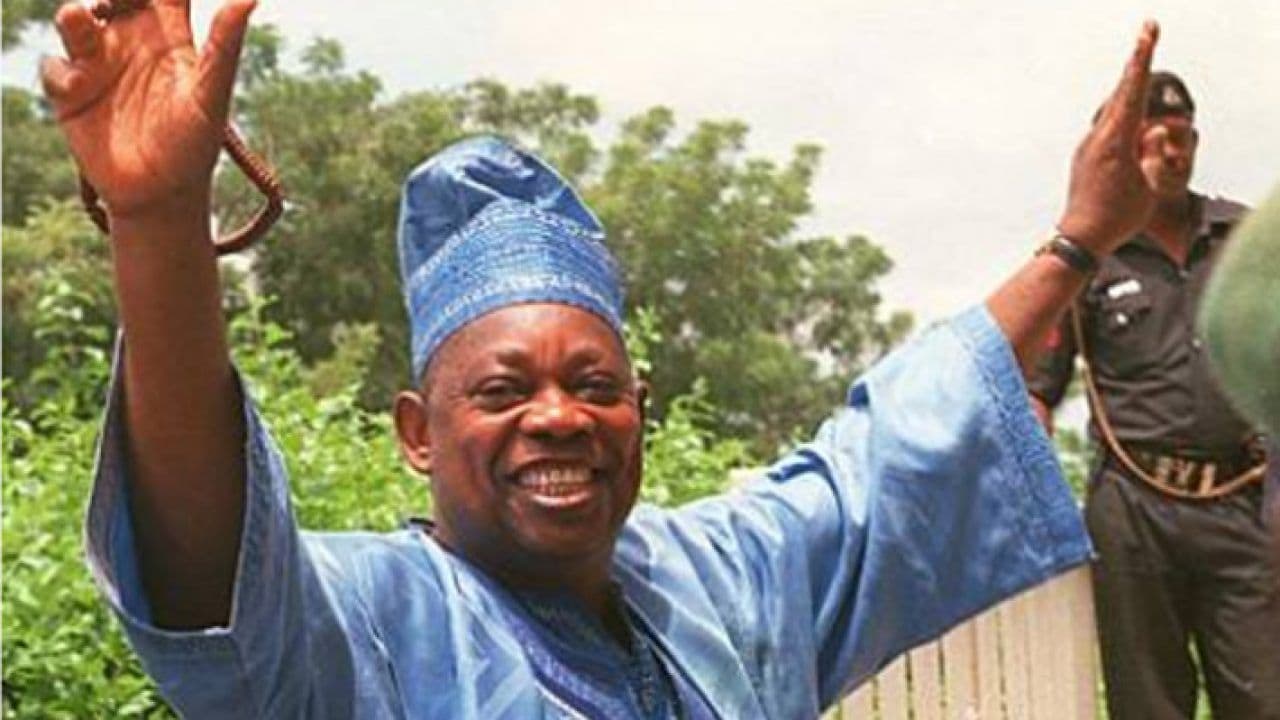
MKO Abiola, full name Moshood Kashimawo Olawale Abiola, was a businessman, publisher, philanthropist and politician who became one of the central figures in Nigeria's pro-democracy struggle.
He was the presidential candidate of the Social Democratic Party (SDP), with Baba Gana Kingibe as his running mate, in the 1993 election, contesting against Bashir Tofa of the National Republican Convention (NRC). The election was meant to usher in a new political atmosphere in a country that had experienced a series of military coups since independence from Britain.
The military government under General Ibrahim Babangida annulled the election after voting had taken place and results were being collated, citing widespread electoral malpractice and other concerns. The decision was heavily contested and led to protests, unrest and a prolonged political crisis.
Available results showed Abiola with a substantial lead, with reported victories in states including Lagos, Ogun, Oyo, Ondo, Osun, Edo, Delta, Kaduna, Kano, Kwara and Plateau, among others. His support extended beyond his south-western base. In a 1994 resolution, the United States Congress also recorded that reported returns showed Abiola leading in 20 of Nigeria's 30 states.
While his 1993 annulment broadcast cited malpractice, Babangida's later account acknowledged the scale of Abiola's victory, a contradiction that has remained central to the June 12 story.
Following the crisis, Babangida stepped aside, and an Interim National Government headed by Ernest Shonekan was established. The arrangement lasted about three months before General Sani Abacha took power on 17 November 1993.
From Exile to Epetedo
After the annulment, Abiola spent a brief period abroad, including time in the United Kingdom and the United States, where he sought international support for the mandate he believed Nigerians had given him.
After his return to Nigeria in September 1993, the stakes were high, and tension grew as his supporters became increasingly resolute. With Abacha now in power, there was no return to the June 12 election.
On 11 June 1994, exactly a year after the election, Abiola made what became known as the Epetedo Proclamation in Lagos. He reminded Nigerians that they had voted for him and declared that a new Government of National Unity was in power, ending with the memorable words: "No one can give you power. It is yours. Take it!"
The declaration directly challenged the Abacha government. Declared wanted after addressing a rally in Lagos, Abiola was arrested on 23 June 1994 and detained for the remainder of Abacha's rule.
General Abacha died on 8 June 1998 and was succeeded by General Abdulsalami Abubakar, who began a new transition to civilian rule. Abiola would not live to see the return of democracy.
Death in Detention and Unanswered Questions
On 7 July 1998, Abiola died in detention in Abuja during a meeting with a United States delegation that included Thomas Pickering and Susan Rice. The official medical account attributed his death to cardiac arrest associated with long-standing heart problems. His death, however, immediately generated questions, given the circumstances of his final hours.
The controversy later featured prominently before the Human Rights Violations Investigation Commission, popularly known as the Oputa Panel. Testimonies from those involved in his security and detention produced conflicting accounts.
Among those whose testimonies came under scrutiny were Major A. S. Aliyu, Chief Security Officer to General Abubakar, Assistant Superintendent of Police Theodore Zadok, who was responsible for Abiola's detention security; and Major Hamza Al-Mustapha, former Chief Security Officer to General Abacha, who also testified about Abiola's movement to Akinola Aguda House and the meeting where he died.
It is important to distinguish allegation from fact. The Oputa Panel did not conclusively establish that Abiola was murdered or identify a person responsible for his death. The official medical account remained cardiac arrest. The unanswered questions, however, have continued to form part of the historical debate, and are among the issues explored by the documentary.
Recognition and Legacy
In 2018, the Federal Government formally recognised the historical significance of June 12 by changing Democracy Day from 29 May to 12 June. President Muhammadu Buhari also posthumously conferred Nigeria's highest national honour, the Grand Commander of the Federal Republic (GCFR), on Abiola, describing him as the presumed winner of the annulled election.
The recognition gave an official dimension to a struggle that had remained unresolved for decades. Then, in 2025, former Head of State General Babangida publicly acknowledged that Abiola won the June 12 election, adding another significant chapter to the history.
According to director Ose Oyamendan, the documentary does not simply ask, "Who was MKO Abiola?" It investigates what happened to the June 12 mandate, the political decisions surrounding its annulment, Abiola's detention and the unresolved circumstances of his death. Designed for both younger and older generations, it seeks to preserve history and connect the June 12 experience to Nigeria's democracy today.
At the Nigerian premiere, Oyamendan described the story as one belonging to Nigerians, centred on memory, power, courage, sacrifice and the consequences of political choices.
The choice of 1 October for the Nigerian premiere gives the story another layer of meaning. As Nigeria marked 66 years of independence, it revisited the story of a man whose mandate became one of its most enduring democratic questions, from the polling booths of 12 June 1993 to the annulment, the protests, Epetedo, arrest, detention, death in 1998, and the eventual recognition of 12 June as Democracy Day.
MKO Abiola never sat in Aso Rock as Nigeria's elected president. Yet his name remains attached to one of the defining moments in Nigeria's democratic history.
Perhaps that is the greatest paradox: a president who never ruled, but a political figure whose unfinished mandate continues to influence the meaning of democracy in Nigeria and now returns to the screen, not simply as the story of one man, but as a reminder of an election, a struggle, a country, and the price paid for the question of who truly owns political power.