
Discipline is the bedrock of good character and responsible living. It teaches a child self-control, respect, a sense of responsibility and sound moral values. For generations, parents and teachers shaped young people through guidance, correction, consistent rules, and by example.
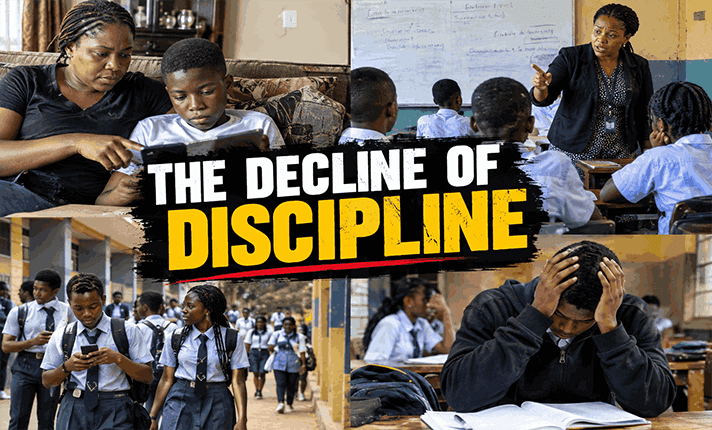
Today, that emphasis is slipping. At home and in school, some parents and educators downplay discipline. Some ignore inappropriate behaviour. Others over-indulge their wards. And some avoid correction altogether for fear of being labelled harsh. The result is a generation growing up with less direction, less accountability and less respect for authority. The consequences reach far beyond the classroom.
The Changing Role of Parents
Modern life has reshaped parenting. Many parents are stretched by demanding careers, businesses, and the constant pull of social media. That leaves little time to guide and supervise children properly.
Some now believe that scolding or setting firm limits is outdated and may harm a child’s self-esteem. Others relinquish authority and try to become their children’s friends instead.
As a result, many children are left unsupervised. They consume uncensored online content, stay out late, speak rudely to adults, and make major decisions without guidance. Children raised without clear boundaries and consequences often conclude that no one has the right to correct them.
Discipline Under Pressure in Schools
Schools are mirroring the same pattern. Faced with complaints from parents, shifting education policies, and fears of abuse allegations, many teachers hesitate to discipline students. Measures that once maintained order are now misunderstood or criticised, even when they are meant to protect learning.
Overcrowded classrooms and limited administrative support make management harder still. Consequently, some students come to class with mobile phones despite school rules, address teachers rudely, wear uniforms incorrectly, disrupt lessons, and in some cases, resort to violence.
When teachers cannot respond to bad behaviour with fair and appropriate measures, classrooms become disorderly. Learning suffers, and academic performance declines.
The Impact on a Child’s Future
A child who grows up without discipline struggles to build lasting success. Discipline instils hard work, time management, perseverance, respect for authority, personal responsibility and the ability to delay gratification for greater goals.
Without these, many students lose interest in study, become truant, grow irresponsible, and turn to examination malpractice instead of effort.
On entering adulthood, the gap widens. Following instructions, accepting criticism and working well with others can feel like a Herculean task. Many do not fail for lack of intelligence or talent, but because they were never taught the discipline required to apply them.
The Wider Cost to Society
The effects extend beyond individuals. Young people without structure may drift into cultism, internet fraud, drug abuse, armed robbery and other vices.
This also fuels broader problems: corruption in public institutions, disregard for laws such as traffic regulations, family instability, and rising crime. Governments then spend vast resources on policing, prisons and rehabilitation, instead of on education, healthcare and development.
One undisciplined life can, and often does, affect an entire community.
Restoring Discipline for a Better Future
If we want responsible future generations, the culture of discipline must be restored both at home and in school.
Parents should set clear rules, supervise actively, and model the behaviour they expect.
Teachers should be empowered to correct students firmly, fairly and with genuine care for their development.
Government and school authorities should back policies that allow balanced, effective discipline.
Crucially, discipline must not be confused with cruelty or abuse. It is an expression of care, guidance and responsibility. It equips children with the values and character to become productive, respectful adults.
If society neglects discipline today, it invites far greater problems tomorrow. By working together (parents, educators, communities and government), we can build a more responsible, peaceful and prosperous society for the next generation.