
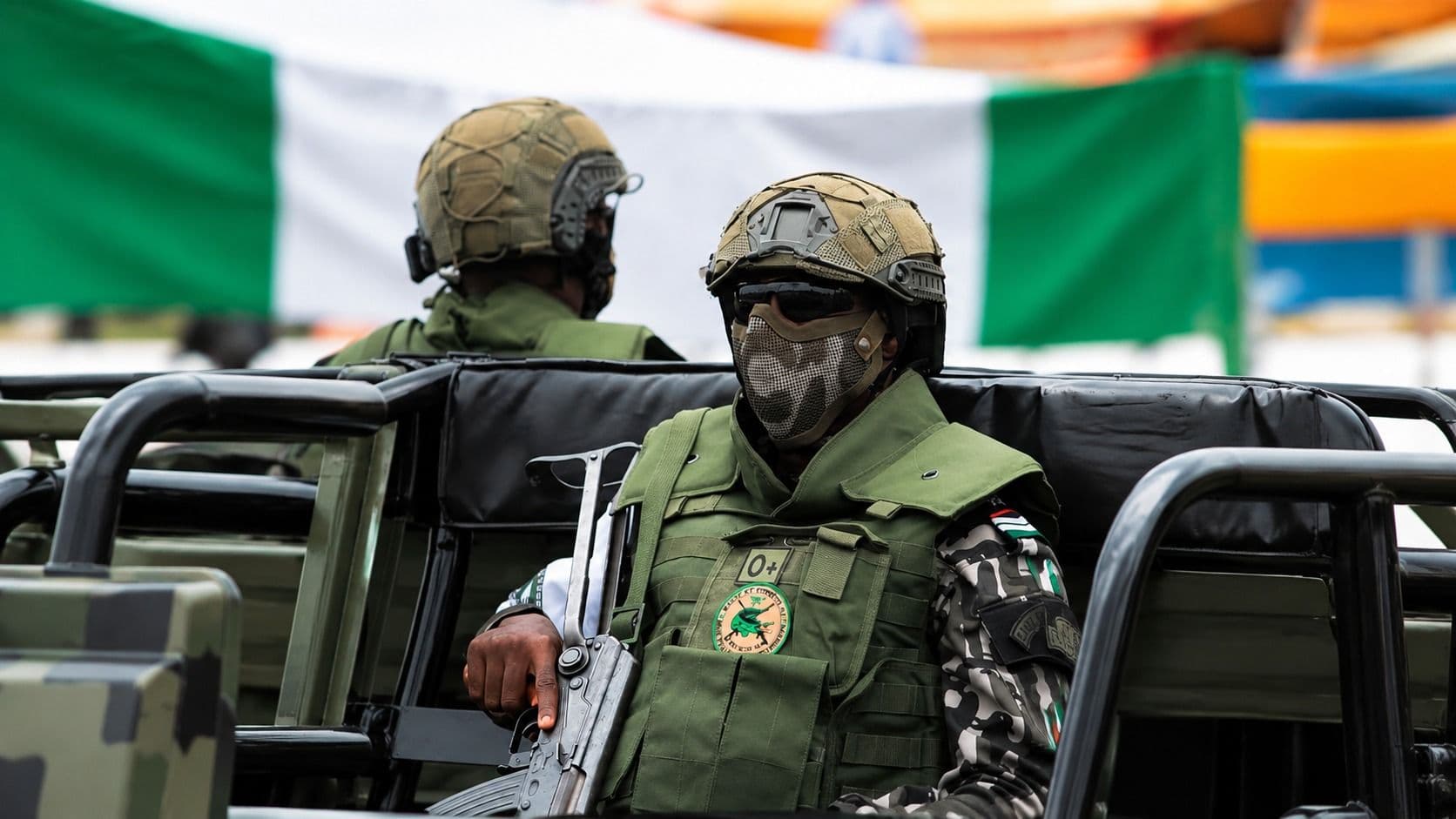

Nigeria is facing several security challenges at once, each with its own causes and regional dynamics. Understanding them separately helps to explain why progress has been slow.
Several Conflicts, Not One
In the North-East, the Boko Haram and ISWAP insurgency has lasted more than 16 years. In February 2026, villages in Adamawa's Madagali and Hong areas were attacked, and on 5 March, police in Borno said Boko Haram raided a military base in Gwoza.
In the North-West and North-Central, armed gangs described as bandits operate alongside jihadist groups. Analysts say these groups have been emboldened by instability in Niger and Burkina Faso. In February, gunmen killed at least 46 people in three villages in Niger State's Borgu area, days after an attack in the same area killed more than 160. In April, at least 60 people were killed across villages in Kebbi and Niger states.
In the Middle Belt, the Peoples Gazette counted at least 119 deaths in Plateau State between January and March 2026.
How the Scale Is Counted
The figures vary because sources count differently and are not directly comparable, but the pattern of insecurity is evident. The Institute for Economics and Peace ranked Nigeria fourth in its March 2026 Global Terrorism Index, reporting a 46 per cent rise in terrorism-related deaths in 2025. A civil society group, the International Society for Civil Liberties and Rule of Law (Intersociety), said 1,402 people were killed or abducted between 1 January and 6 April 2026.
Why It Persists
Analysts most often point to five factors:
§ Stretched security forces. With more than 200 million people, Nigeria's police and army must cover multiple regions at once.
§ Economic pressure. Unemployment and loss of farmland make recruitment easier for armed groups.
§ Weak prosecution. Few arrests lead to convictions, which reinforces the perception that crime carries little risk.
§ Porous borders. Weapons and fighters move across the wider Sahel with limited resistance.
§ Transparency in spending. Some commentators say security budgets need clearer public accountability. The government says it is working to address the problem.
A Contested Picture
How the violence is described remains contested. President Donald Trump designated Nigeria a Country of Particular Concern, citing what he described as a "Christian genocide." Open Doors reported more than 3,400 Christians killed for their faith in its latest reporting period, the highest figure for any country. Other analysts note that the violence affects both Christians and Muslims, and that it reflects mixed motives: jihadism, ransom-seeking crime and disputes over land and resources.
International involvement has also grown. In late December 2025, the United States carried out airstrikes on armed group targets in Sokoto State, an operation Nigeria said it had approved.
What Communities Are Asking For
Affected communities want more direct protection. Leaders in Borno have asked President Tinubu to establish a military base in the area to prevent repeated attacks. Critics also argue that national attention is shifting towards the 2027 elections while the violence continues.
The Bottom Line
Nigeria's insecurity is a set of overlapping conflicts, not a single one. Attacks continue across several regions, but sources differ on the number of people affected and on what is driving the violence. The causes most often cited are limited state reach, economic hardship, weak justice and instability across the region. The question that remains is what is happening to security in Nigeria, and whether it will get better or worse.