
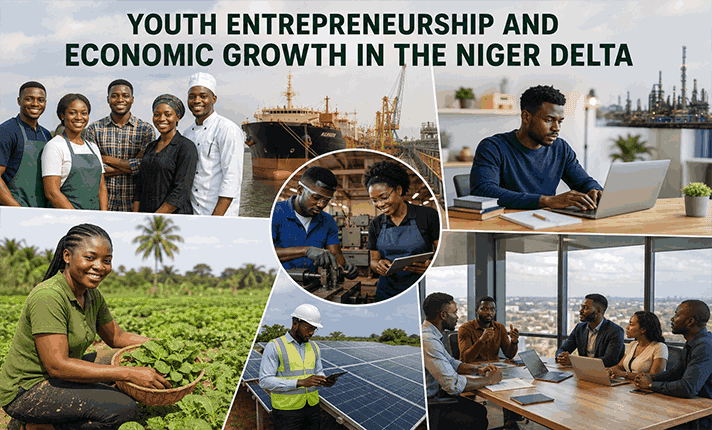

The Niger Delta, one of Nigeria's most resource-rich regions, is witnessing a quiet transformation. It is being led by young people.
Faced with unemployment and economic uncertainty, many youths are choosing innovation over dependence. Instead of waiting for government jobs, they are building businesses in agriculture, technology, fashion, manufacturing, renewable energy, logistics, fisheries and the creative industries. In doing so, they are creating jobs, generating income and driving sustainable growth.
This shift matters. Entrepreneurship has become a practical tool for reducing poverty, discouraging crime and promoting self-reliance across Bayelsa, Rivers, Delta, Akwa Ibom, Cross River, Edo, Ondo, Abia and Imo.
Beyond Individual Success
The impact goes far beyond personal achievement.
At state level, new businesses increase internally generated revenue, stimulate local industries and strengthen rural economies. Nationally, youth-led enterprises contribute to GDP, encourage innovation, reduce unemployment and attract both local and foreign investment.
Across Africa, the same spirit is helping position the continent as a growing hub for technology, agribusiness, renewable energy and digital commerce. As markets become more connected through the African Continental Free Trade Area, businesses founded in the Niger Delta have a greater chance to expand across the continent and compete globally.
The New Role Models
Young Nigerians have no shortage of inspiration.
Figures such as Iyinoluwa Aboyeji, co-founder of Andela and Flutterwave, Odunayo Eweniyi, co-founder of PiggyVest, and Kestin Pondi, managing director of Tantita Security Services, show how scalable enterprises can be built from local ideas. Regional leaders like Moses Siasia, chairman of the Mosilo Group, and networks such as the Niger Delta Young Professionals have also been active. Through initiatives like MSME Summits, they encourage young people to look beyond oil and invest in agriculture, technology and services.
Within the Delta itself, this is already happening. Young entrepreneurs are running fish farms, cassava and palm oil processing businesses, fashion labels, digital marketing agencies, software firms, transport services, photography and media studios, and environmental solutions. Their stories prove a simple point. With innovation, determination, training and access to finance, a local idea can become a nationally recognised enterprise.
Why It Matters
The benefits are significant and lasting. New businesses create employment. They improve household incomes. They strengthen local supply chains, build leadership, financial management and digital skills, and increase government revenue.
For a region that has long depended on oil, this diversification is vital. Moving into agriculture, tourism, technology, manufacturing, and the creative economy builds economic resilience. It leads to stronger communities, greater social stability, and improved standards of living.
What Comes Next
The future will depend on sustained support. Governments, private investors, schools, universities, and development organisations all have a role.
Young entrepreneurs need better access to affordable finance, business education, vocational training, reliable power, and digital infrastructure. They need innovation hubs, incubators, and mentorship that reaches them. They also need access to markets, both within Nigeria and beyond.
If that support is provided, the Niger Delta can do more than create jobs for its youth. It can become a leading centre for innovation, economic diversification and inclusive growth, with benefits that extend far beyond the region to Nigeria and the continent.