
For decades, the global narrative around health in Nigeria was one of “intervention.” We were the recipients of aid, the focus of “projects,” and the destination for donated vaccines. But if you walk through the halls of the Transcorp Hilton in Abuja this April, you’ll sense a profound shift. The conversation is no longer just about what the world can do for Nigeria, but what Nigeria is doing for the world.
Welcome to the era of Health Diplomacy, where Nigeria is quietly repositioning itself as the regional engine room for medical innovation.
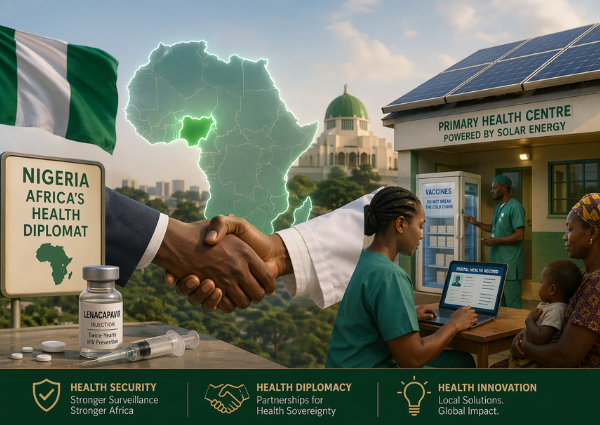
Earlier this March, Nigeria made a move that sent ripples across the continent: the launch of Lenacapavir. This isn’t just another pill; it’s a twice-yearly injection for HIV prevention. While many nations are still debating implementation strategies, Nigeria has jumped to the frontline, securing regulatory approval through NAFDAC and rolling it out across ten pilot states.
By becoming an early adopter of such cutting-edge science, Nigeria is acting as a “living lab” for sub-Saharan Africa. The data collected in Kano, Akwa Ibom, and Lagos over the next year won’t just inform Nigerian doctors, it will provide the blueprint for HIV control across the entire African Union.
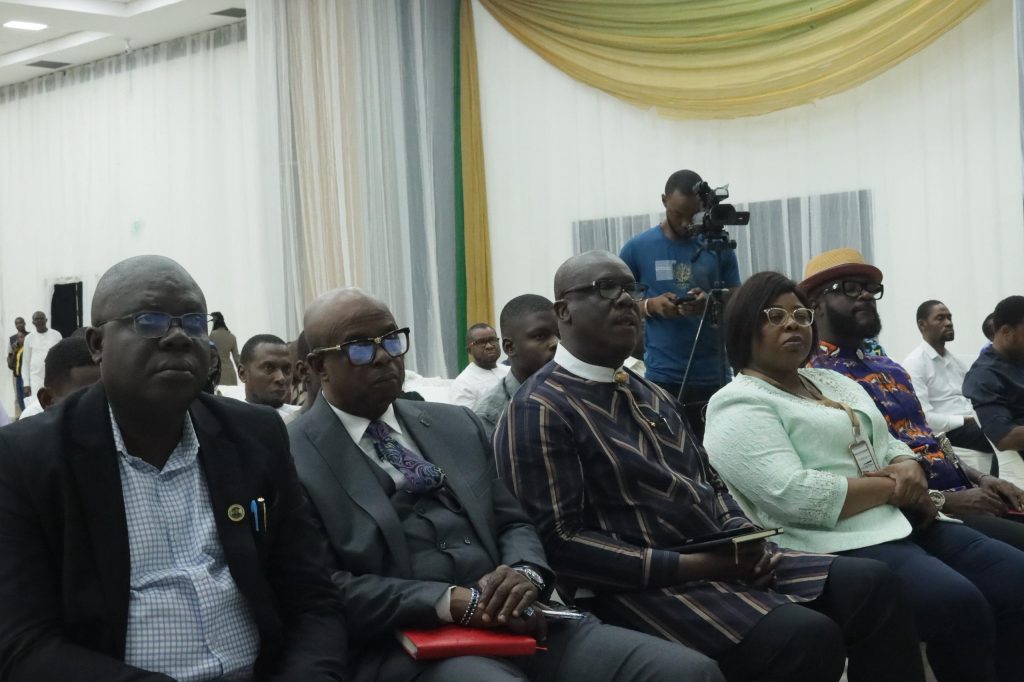
It isn’t just about the drugs; it’s about the seat at the table. On April 14, the World Health Organization (WHO) convened the first Ambassadorial Health Diplomacy Roundtable in Abuja. Picture this: heads of foreign missions and diplomatic heavyweights gathering not to discuss trade or security, but to align their resources behind the Nigeria Health Sector Renewal Investment Initiative (NHSRII).
This is a strategic pivot. By using diplomacy to harmonize international funding with national priorities, Nigeria is moving away from “donor dependence.” The goal is clear: by 2030, Nigeria wants to exit the cycle of relying on external handouts for primary health commodities. The 2026 budget already reflects this, with President Tinubu directing a massive increase in domestic funding for laboratory reagents and primary care.
Perhaps the most intriguing part of this hub-building isn’t happening in high-rise offices, but in rural primary healthcare centers (PHCs). In Kano, 28 PHCs recently went fully solar.
It sounds like a simple infrastructure project, but in the world of health innovation, electricity is the ultimate medicine. Reliable power means:
- Cold Chains that never break: Vaccines for malaria and TB stay potent.
- 24/7 Deliveries: Safe maternal care doesn’t stop when the sun goes down.
- Data in Real-Time: Digital health records can finally be synced to a national database.
When Nigeria fixes the “power-to-health” pipeline, it creates a scalable model for every other energy-constrained nation in the Global South.
Nigeria is currently hosting the high-level meeting on Antimicrobial Resistance (AMR). Why here? Because Nigeria has developed one of the continent’s most robust point-of-entry surveillance systems. We are becoming the “frontline defense” for health security. If a new threat emerges, the world is increasingly looking to Abuja’s diagnostic networks to catch it first.
The transition from a “health consumer” to a “health hub” isn’t just a win for our doctors; it’s a win for our sovereignty. Nigeria is proving that with a blend of scientific boldness, diplomatic savvy, and a few solar panels, a nation can stop being a patient and start being the provider.
The next time you hear about a medical breakthrough in Africa, don’t be surprised if the “Made in Nigeria” stamp or at least the “Tested in Nigeria” data, is all over it.