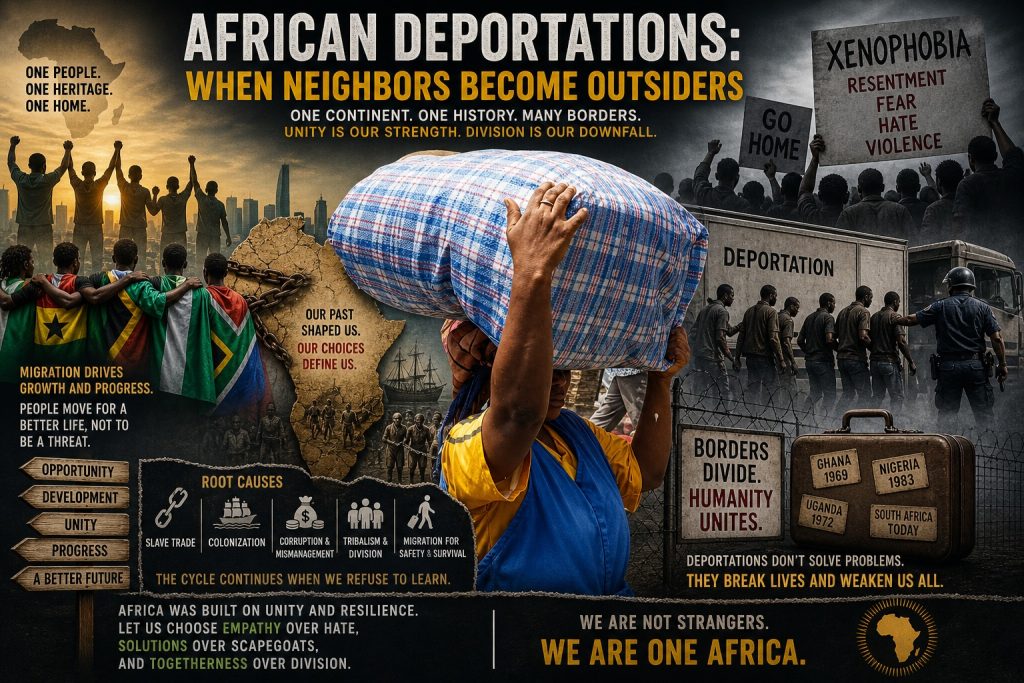

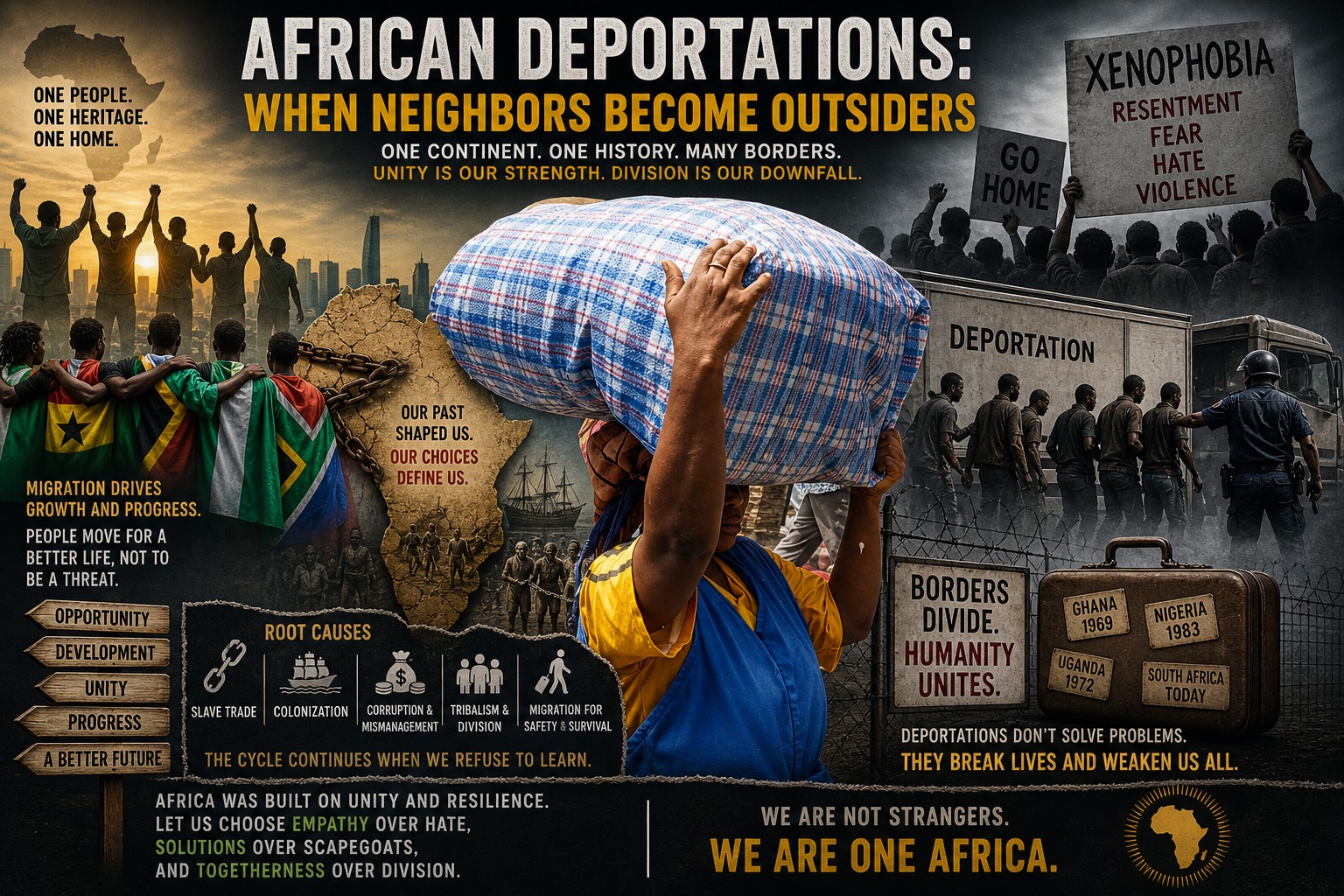
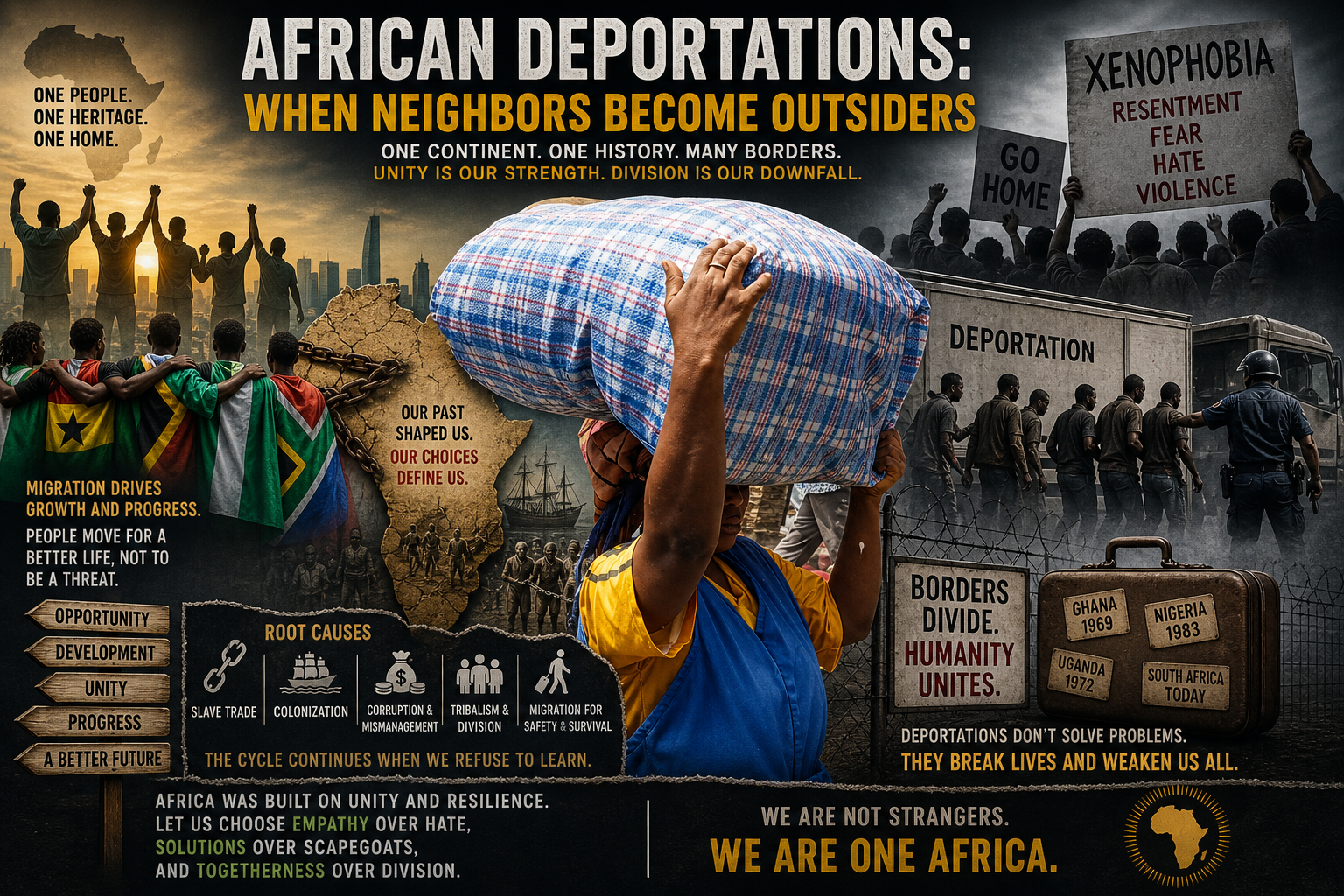
African Deportations: When Neighbors Become Outsiders
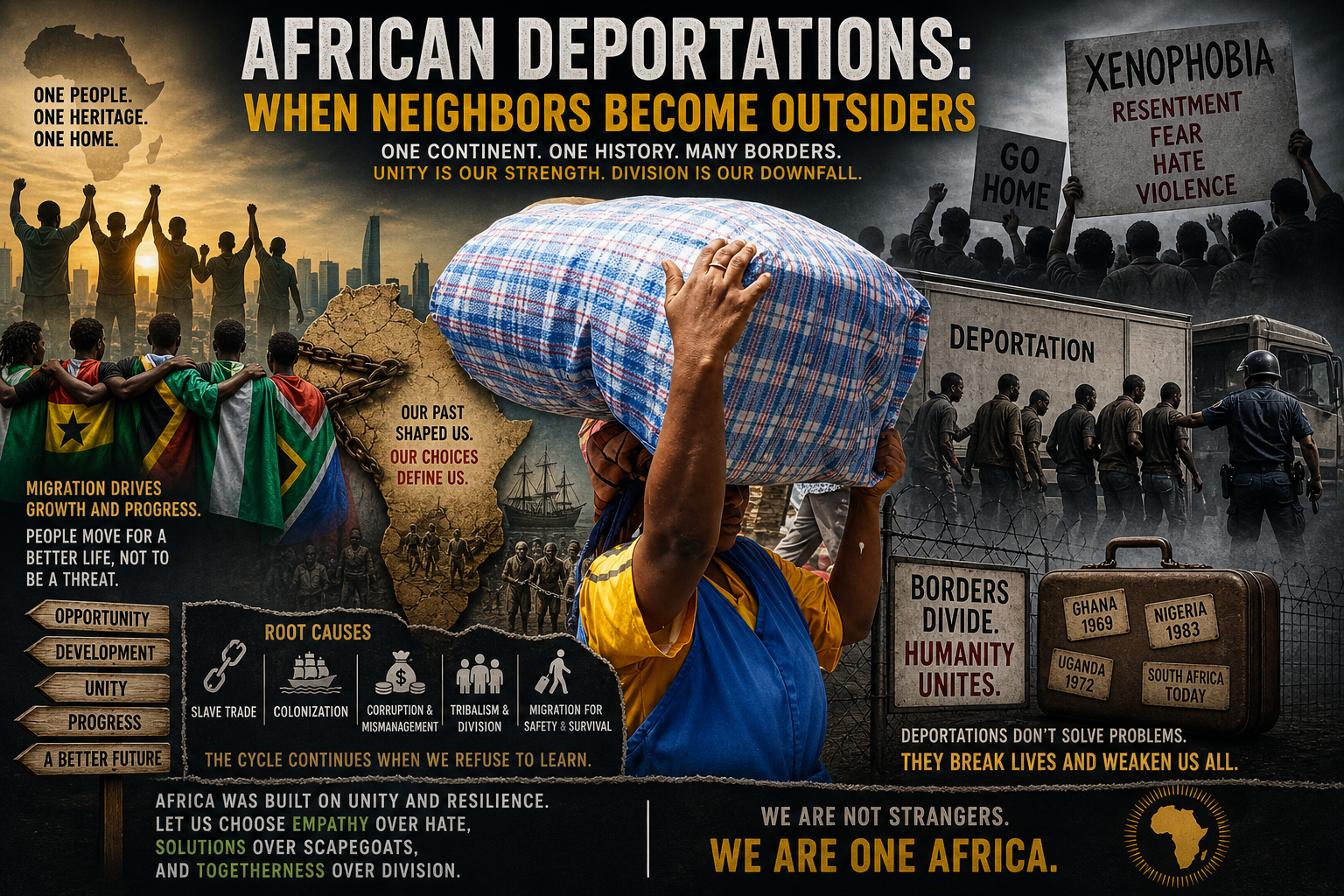
Xenophobia has been a word that is synonymous with South Africa on the African continent; for some, it is the new breed of discrimination amongst Africans and within the continent. But why is it so? Well, it’s for the very fact that Africa is meant to be the “home,” the “motherland,” the place that was deprived of all its people, love, unity, resources, and heritage; the idea of Africa invokes unity and community formed through struggles. What has now happened to Africa and its people?
Migration has been a key driver of development and progress in developing countries. People move to other countries for better opportunities and, in some cases, safety; yet in today’s conversation, migration has been a very sensitive and volatile topic. Despite not being the most migrated people in the world, it is seen as though Africans are the most migrated people, and the worst of it all, fellow African countries see other African countries as a threat due to migration. The reason for this is deeply rooted in two major factors—slave trade and colonization.
The slave trade era displaced many Africans; many healthy Africans were taken away forcefully in large numbers, creating a vacuum that was later felt during the colonization era. The colonization era blinded Africans to the immense resources that were hidden underneath their land. Furthermore, the aftermath led to immense corruption and mismanagement, which has now left many countries in Africa impoverished. With poverty came anger, frustration, and tribalism, which has led to civil unrest; and with that comes migration, as safety and survival become priorities. These and many more factors have led to a large number of migrations on the continent.
The first major case of mass deportation in Africa during the independence era occurred in Ghana in 1969, when Prime Minister Kofi Abrefa Busia issued the Aliens Compliance Order, forcing over 2 million undocumented migrants—mostly Nigerians—to leave the country. The reason, in the international worldview, was simple: the country was struggling with economic hardship, political unrest, and unemployment. However, the more obvious reason was public resentment towards Nigerians and other Africans. Then, in 1983, Nigeria carried out one of the most documented mass deportations, with around 2 million Africans—mostly Ghanaians—forcefully sent back to their country. The “Ghana-must-go” slogan was seen not just as an economic revolt or solution, but almost geopolitical and retaliatory, because tensions between both countries were already high for reasons rooted in sentiment and public resentment, as opposed to purely economic concerns.
In recent times, South Africa has led the way with a more aggressive approach. Xenophobia is more dangerous, as it has more attributes of violence and lacks fundamental legal backing; it is driven by pure resentment, and its ‘modus operandi’ often has tacit government enforcement around it. It is a revolt against fellow Africans, fueled by the ideology that other Africans are there to take over their country.
Critically observing the situation, both past and present, there is one thing that stands out amongst all, public resentment as a result of high rates of unemployment. But is this actually true, or should it be considered a valid reason for all of this hatred? In retrospect, Uganda, during the Idi Amin regime, forcefully deported over 50,000 non-Ugandans in 90 days, seizing their businesses, farmlands, and houses. A similar reason was given, but did it solve the problem of unemployment or economic hardship? The answer is an unequivocal NO.
With South Africans making a call for zero tolerance toward other Africans in their country, it still begs the question: does it stop the issues of unemployment, security, and hardship? We will find out in years to come. But then again, is this a way for politicians to shift blame, knowing that the government is responsible for the general well-being of its citizens and those living in the country? In Idi Amin’s Uganda, those forcefully deported were expatriate workers, traders, and artisans. In Ghana, the deported Africans were mostly artisans and traders; the same applies to the “Ghana-must-go” era. In all cases, they had built lives for themselves, raised families, and created livelihoods for future generations, including those from the countries they resided in. This, in turn, improved the general economy of the host countries and benefited the governments of the day.
So, the problem is more than just economic factors, and definitely not just security-related; it is rooted in a deeper disconnect within the homeland we call Africa.