
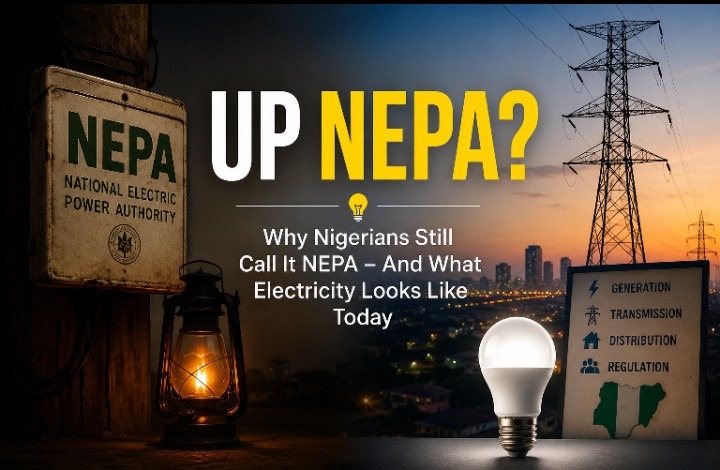
Nigeria may have dissolved NEPA more than two decades ago, but for millions of Nigerians, electricity is still simply called “NEPA.” The reason is simple: while the names and structures of the power sector have changed repeatedly, the public experience of electricity has remained largely familiar. Power outages, unstable supply, sudden restoration of light, and the celebratory cry of “Up NEPA!” survived every reform and every institutional rebranding.
For many Nigerians, NEPA stopped being merely the name of a government agency and became the cultural identity of electricity itself. Even after the transition to PHCN and later privatisation, citizens still associated the entire power sector with the old authority because the realities of power supply did not change dramatically enough to create a new public identity. In everyday conversation, “NEPA took light” remains more natural than naming any distribution company or regulator.
The National Electric Power Authority was created in 1972 after the merger of the Niger Dams Authority, which handled electricity generation, and the Electricity Corporation of Nigeria, which managed distribution and transmission. NEPA became a fully government-owned monopoly responsible for generating, transmitting, distributing and regulating electricity across the country.
However, over time, the system struggled under increasing population growth, weak infrastructure, poor maintenance and inadequate investment. Electricity supply became unreliable, forcing homes and businesses to depend heavily on generators. By the early 2000s, there was growing pressure to reform the sector and attract private investment.
In 2005, NEPA was replaced by the Power Holding Company of Nigeria as part of a broader restructuring programme. PHCN served as a transitional entity that unbundled the power sector into separate companies responsible for different aspects of electricity supply.
Today, Nigeria’s electricity industry operates through three major segments: generation, transmission and distribution.
Generation companies, commonly called GenCos, are responsible for producing electricity. Unlike the NEPA era, most of these companies are now privately owned or privately managed. Major GenCos include Egbin Power Plc, Geregu Power Plc, Kainji/Jebba Hydro Electric Plc, Transcorp Power and Azura Power. These companies generate electricity which is then transferred to the national grid.
Transmission is handled mainly by the Transmission Company of Nigeria, which remains government-owned. TCN transports bulk electricity from generating stations to distribution companies across the country through transmission lines and substations.
Distribution companies, known as DISCOs, are responsible for delivering electricity directly to homes and businesses. During the privatisation process between 2013 and 2014, eleven DISCOs were sold to private investors. They include Abuja Electricity Distribution Company, Eko Electricity Distribution Company, Ikeja Electric, Port Harcourt Electricity Distribution Company, Benin Electricity Distribution Company and others serving various regions of the country.
This means electricity supply is no longer controlled solely by the federal government as it was under NEPA. Private investors now play major roles in generation and distribution. As a result, persistent power instability cannot always be blamed entirely on government alone. The challenges often involve multiple actors: generating companies struggling with gas supply and infrastructure, transmission bottlenecks within the national grid, distribution companies facing technical losses and poor revenue recovery, as well as issues of regulation and investment.
Still, reforms have continued. Between 2017 and 2022, Nigeria introduced mini-grid and eligible customer regulations that allowed more private participation in electricity supply. Then came the biggest shift yet: the Electricity Act 2023. The Act decentralised the electricity market further by allowing states to establish and regulate their own electricity markets independently of the federal system.
For Bayelsa State, this development marked a significant turning point.
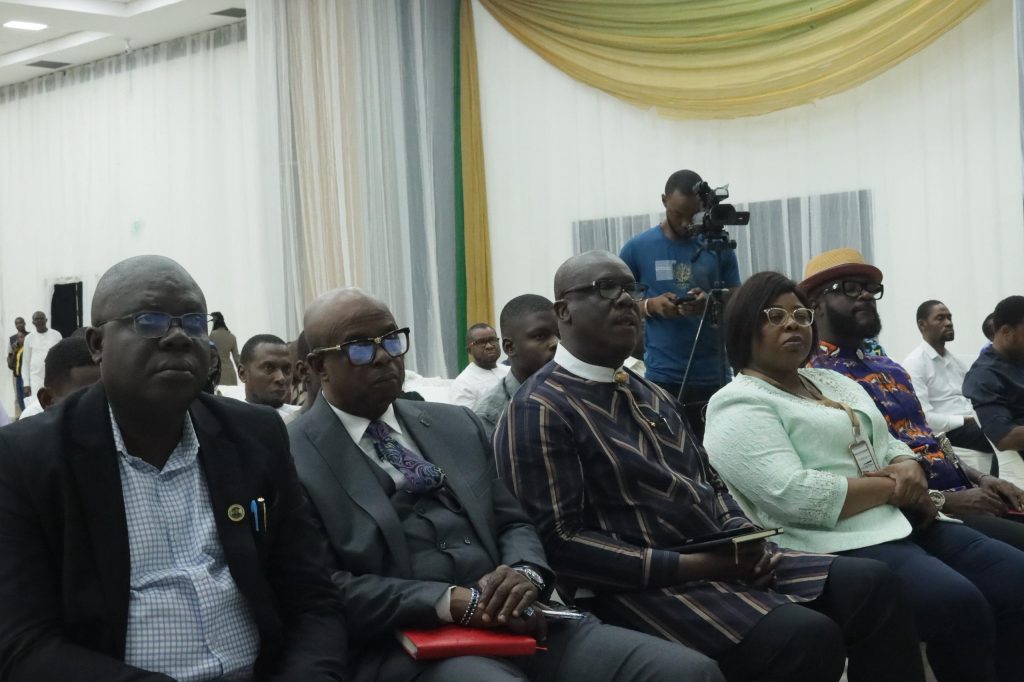
The Bayelsa State Electricity Regulatory Authority, popularly known as BYERA, now serves as the official electricity regulatory authority in the state. BYERA was established to oversee licensing, market entry, regulation and electricity development within Bayelsa’s emerging power sector.
Its responsibilities include regulating electricity operators within the state, encouraging private investment, supporting market development and ensuring compliance with the new legal framework created under the Electricity Act. As Bayelsa seeks to expand access to stable electricity, BYERA represents a move toward a more localised and potentially more responsive electricity market.
Nigeria’s power sector has travelled a long road from the days of NEPA monopoly to today’s partially liberalised market. Yet even as the system evolves through private participation and state-level regulation, one reality remains unchanged: for many Nigerians, electricity still answers to the same old name – NEPA.